Analogue Pocket vs Anbernic RG35XX SP: FPGA or emulation?
The Analogue Pocket plays original cartridges on FPGA hardware; the RG35XX SP is an emulation clamshell. Here is what that means on paper.
By Sepehr Sabbagh-pourPublished 14 Oct 2026Updated 9 Nov 20267 min read

The maker says the Analogue Pocket plays original handheld cartridges using FPGA chips, while the Anbernic RG35XX SP is a clamshell that the maker says runs ported games and "30+ emulators", and the two sit at very different prices.
The difference in one idea
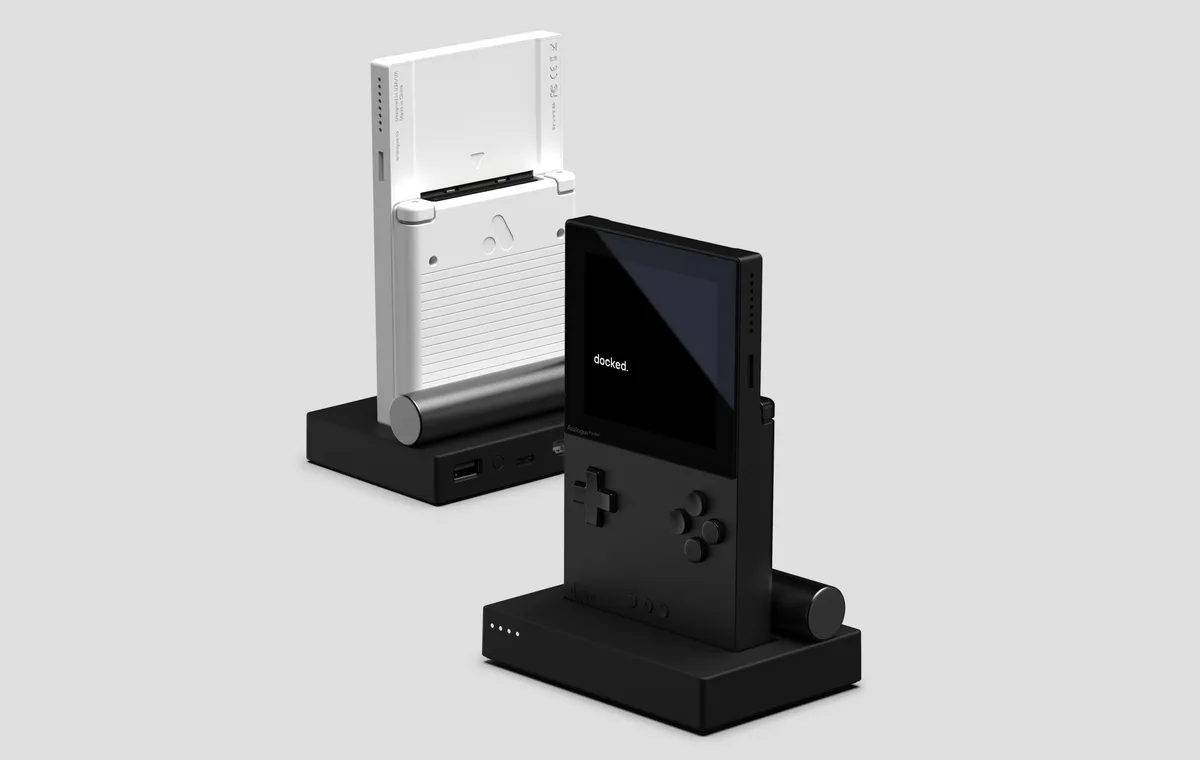
An FPGA (field-programmable gate array) is a chip whose circuits can be reconfigured. Analogue says the Pocket is engineered in FPGAs with no emulation, and it plays Game Boy, Game Boy Color and Game Boy Advance cartridges. We are only reporting that claim as the maker words it; we have not examined the hardware ourselves.
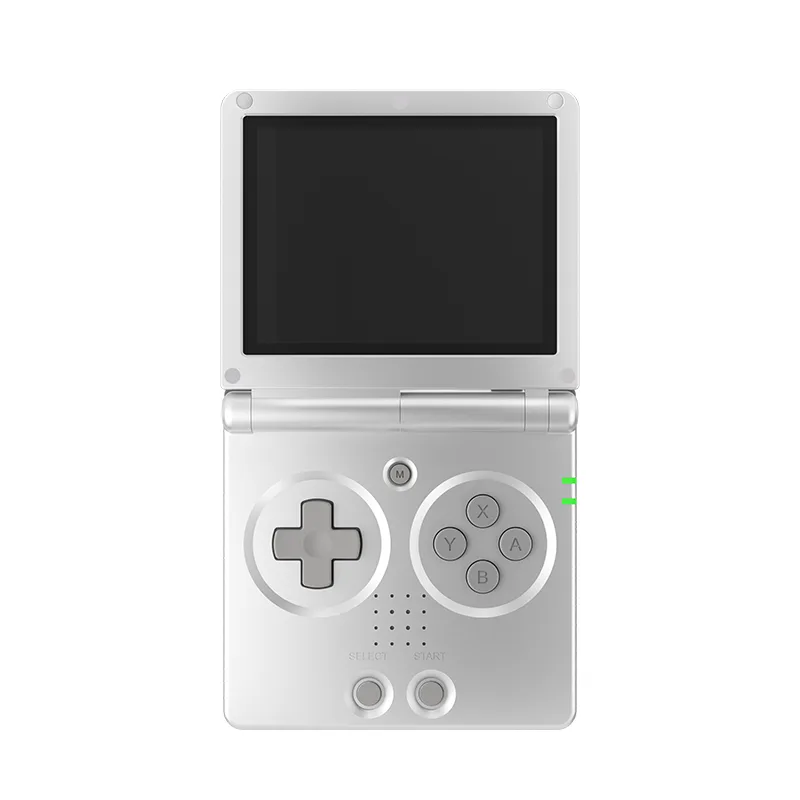
Anbernic describes the RG35XX SP differently. Its page cites "ported games and other 30+ emulators" running on an H700 chip under Linux, and it does not name the systems. So the first split is simple: one maker says its device plays original cartridges with no emulation, the other describes emulators and ported games running from a card.
At a glance
| Row | Analogue Pocket | Anbernic RG35XX SP |
|---|---|---|
| Maker approach | Two FPGAs, which the maker says means no emulation | Emulation; maker cites "ported games and other 30+ emulators" |
| Chip | Two FPGAs (model not stated by the maker) | H700 quad-core Cortex-A53 @ 1.5GHz |
| GPU | Not stated by the maker | Dual-core Mali-G31 MP2 |
| Screen | 3.5 inch LCD, Gorilla Glass | 3.5 inch IPS, full lamination |
| Resolution | 1600 x 1440 (615 ppi) | 640 x 480 |
| Battery | 4300 mAh; maker states 6 to 10 hours | 3300 mAh; maker states 8 hours |
| RAM | Not stated by the maker | 1GB |
| Storage | micro SD slot; internal memory not stated | 64GB card included; dual TF slots, up to 512GB per card |
| Operating system | PocketOS | Linux 64-bit |
| Weight | Not stated by the maker (technical drawing only) | 192 g |
| Size | Not stated by the maker (technical drawing only) | 8.9 x 8.5 x 2.7 cm on Anbernic's product page (a separate Anbernic page lists length and width the other way round) |
| Charging | USB-C charging, rate not stated | 5V/1.5A, supports C2C charger |
| Ports | micro SD slot, USB-C charging, link port, 3.5mm headphone output | Not stated by the maker |
| Wi-Fi and Bluetooth | Not stated by the maker as device specs | 802.11ac, Bluetooth 4.2 |
| Controller connections | Dock: Bluetooth and 2.4G wireless controllers, 2 USB inputs for wired controllers, up to 4 players; Pocket OS connects to 8BitDo Bluetooth and 2.4G controllers | 2.4G wireless, wired and Bluetooth controllers |
| TV output | 1080p HDMI through the dock | HD connection to TV |
| Maker price | $239.99, preorder button (checked 14 Oct 2026) | $57.99 sale, regular $64.99 (checked 14 Oct 2026) |
Where the maker is silent we say so rather than guess. Analogue shows weight and dimensions only as a technical drawing, so there is no stated figure to put in the table.
Screen: the clearest gap
Both screens are listed at 3.5 inches. The Pocket states 1600 x 1440 at 615 ppi; the RG35XX SP states 640 x 480. That is 2.3 million pixels against 307,200, so the Pocket's panel carries roughly 7.5 times as many, worked out from the two stated resolutions. More pixels on the same size of screen means finer detail, but whether that matters depends on the games you play, and neither maker says how its screen treats lower-resolution games.
The panels are different types too: Analogue lists LCD with Gorilla Glass, Anbernic lists IPS with full lamination. Both makers describe their own screens only briefly, so we avoid ranking them on anything beyond the figures above.
Worked example: shape, density and cost
The two screens differ in shape as well as sharpness. 1600 x 1440 divides down to 10:9, almost square, while 640 x 480 is 4:3. A 4:3 picture on the Pocket panel fits at full width, 1600 pixels wide by 1200 tall, leaving 120 pixels of band above and below. On the SP it fills the screen exactly. Neither maker says how its software scales other shapes, so this is arithmetic about the panels only.
Pixel density tells a similar story. Analogue states 615 ppi. The SP's stated 640 x 480 on 3.5 inches works out near 229 ppi by our own sum, since Anbernic does not quote a figure. The cost gap is also easy to put in numbers: $239.99 is about 4.1 times $57.99, or about 3.7 times the $64.99 regular price shown. Currencies are unnamed and shipping is excluded, so this is a ratio of listed numbers, not a total cost.
Games: cartridges or card
This is where the two diverge. The Pocket needs cartridges, and the maker's page counts a library of 2,780+ games. Its separately sold adapters add Game Gear, Neo Geo Pocket and Color, Atari Lynx, and TurboGrafx-16, PC Engine and SuperGrafx cartridges. The maker lists a dock too, with 1080p HDMI output and two USB inputs.
The RG35XX SP uses a 64GB TF (microSD) card, has dual card slots and lists up to 512GB per card. The maker states Wi-Fi 802.11ac and Bluetooth 4.2, with the note that Bluetooth works only with Bluetooth controllers. Anbernic also lists 2.4G wireless and wired controller connections, and an HD connection to a TV; Anbernic does not state a resolution for it. The Pocket's dock lists Bluetooth and 2.4G wireless controller support, two USB inputs for wired controllers and up to four players. Anbernic's page names no systems, so we cannot tell you which ones it covers; read Anbernic's own page before buying for a specific console.
Battery, size and software
Analogue states 6 to 10 hours of gameplay, with 6 hours a rough estimate at default brightness, from a 4300 mAh battery. Anbernic states 8 hours from 3300 mAh. Those are maker claims under unknown conditions, so treat the hour figures as ballparks, not a contest. The SP weighs 192 g by the maker's listing; the Pocket has no stated weight, so portability cannot be compared from the pages.
On software, Anbernic lists Linux 64-bit and 1GB of RAM. Analogue names PocketOS as its operating system and does not state RAM.
Price as the makers show it
Analogue's page lists $239.99 with a Preorder button when checked on 14 October 2026, and showed no UK shipping information. Anbernic's page lists a sale price of $57.99 against a regular $64.99 on the same date. Neither maker names the currency and we have not converted either figure. UK prices are not checked yet. The gap is roughly four times on the numbers shown, before any shipping or import costs.
What the figures cannot tell you
Neither maker publishes how it handles every game, and we have not played on either device, so anything about picture quality, input response or sound is outside what we can say. What the pages do allow is a comparison of kind: a cartridge-and-adapter system with a high-resolution screen and a dock, against a lower-priced card-based clamshell with Wi-Fi and several controller connections. If you are unsure which kind you need, work out first whether your games exist as cartridges you already own, because that decides most of the rest.
What to check before you buy
- Your game library: the Pocket plays cartridges, so count the ones you already own, and note that adapters for other systems are sold separately.
- Availability: Analogue's page showed a preorder button and no UK shipping information when checked.
- Systems on the SP: Anbernic names none, so confirm the ones you care about on its page.
- Total cost: add card, adapter or dock purchases if needed, delivery and import charges to the listed prices, none of which are confirmed for the UK.
Which should you buy?
- You own Game Boy, Game Boy Color or Game Boy Advance cartridges: the Pocket is the one the maker says is built around them and plays them with no emulation.
- You want the sharpest screen: the Pocket's stated 1600 x 1440 is far above 640 x 480.
- You want the lowest outlay and a clamshell: the RG35XX SP is the cheaper device on the makers' figures and has a magnetic lid with a Hall switch.
- You want Wi-Fi: only the SP states Wi-Fi (802.11ac) and Bluetooth 4.2 for the device itself, along with dual card slots. Both list wireless controller support, the Pocket through its dock.
- You want to play on a TV: both state it, with 1080p HDMI through the Pocket dock and an HD TV connection on the SP.
- You need it soon: the Pocket showed a preorder button when checked, so confirm availability with the maker first.
For the full row-by-row data see the side-by-side comparison. If the SP appeals, our comparison of the RG35XX SP and RG34XXSP shows how it sits within Anbernic's clamshells, and how we research explains where every figure here comes from.
Related guides
Devices in this guide
Anbernic
Anbernic RG35XX SP
3.5 in IPS, full viewing angle, OCA full lamination · 3300 mAh · Linux 64-bit
UK price not checked
Frequently asked questions
- Does the Analogue Pocket use emulation?
- The maker says it is engineered in FPGAs, reconfigurable chips, with no emulation, and that it plays original Game Boy, Game Boy Color and Game Boy Advance cartridges. Adapters sold separately add several other cartridge types. This is Analogue's own description, reported as a maker claim, and the model of the FPGAs is not stated. By contrast, Anbernic describes emulators for the RG35XX SP.
- What does the Anbernic RG35XX SP run?
- Anbernic lists an H700 quad-core Cortex-A53 chip at 1.5GHz with a dual-core Mali-G31 MP2 GPU, 1GB of RAM and Linux 64-bit. The page says it supports ported games and other 30+ emulators but does not name the systems, so any specific console should be checked on the maker's page before you buy. Games load from a 64GB TF (microSD) card that comes in the box, with dual slots and a stated maximum of 512GB per card.
- Which has the better screen on paper?
- The Analogue Pocket, by the stated figures: a 3.5 inch LCD with Gorilla Glass at 1600 x 1440 and 615 ppi, against a 3.5 inch IPS panel with full lamination at 640 x 480 on the RG35XX SP. That is roughly 7.5 times as many pixels. The shapes also differ, at about 10:9 against 4:3. The makers say little about how their screens treat other picture shapes or lower-resolution content, so the comparison stops at the specification.
- How much do the Pocket and the RG35XX SP cost?
- On 14 October 2026 Analogue's page showed $239.99 with a Preorder button, and Anbernic's page showed $57.99 as a sale price with a regular price of $64.99. Neither maker names a currency, we have not converted either figure to pounds, and UK prices are not checked yet. The Pocket's cartridge adapters are sold separately, and shipping and import charges to the UK are not stated on either page.
Sources
More from Retro Handhelds
Retro Handhelds
Retroid Pocket Flip 2 vs AYN Thor: which should you buy?
The Flip 2 lists an SD865 at a lower price; the Thor lists a second screen and models from an SD865 Lite up to a Snapdragon 8 Gen 2 with 16GB of RAM.
7 min read
Retro Handhelds
Retroid Pocket 5 vs Retroid Pocket 6: which should you buy?
The Pocket 6 lists a Snapdragon 8 Gen 2, a 120Hz screen and a 6000 mAh battery; the Pocket 5 lists a Snapdragon 865, 60Hz and 5000 mAh, both on 5.5 inch AMOLED.
8 min read
Retro Handhelds
Retroid handhelds compared: all 5 models side by side
A range map of every Retroid handheld in our catalogue, built from the maker's own figures, with advice on choosing between the Classic, 4 Pro, 5, Flip 2 and 6.
6 min read