Mangmi
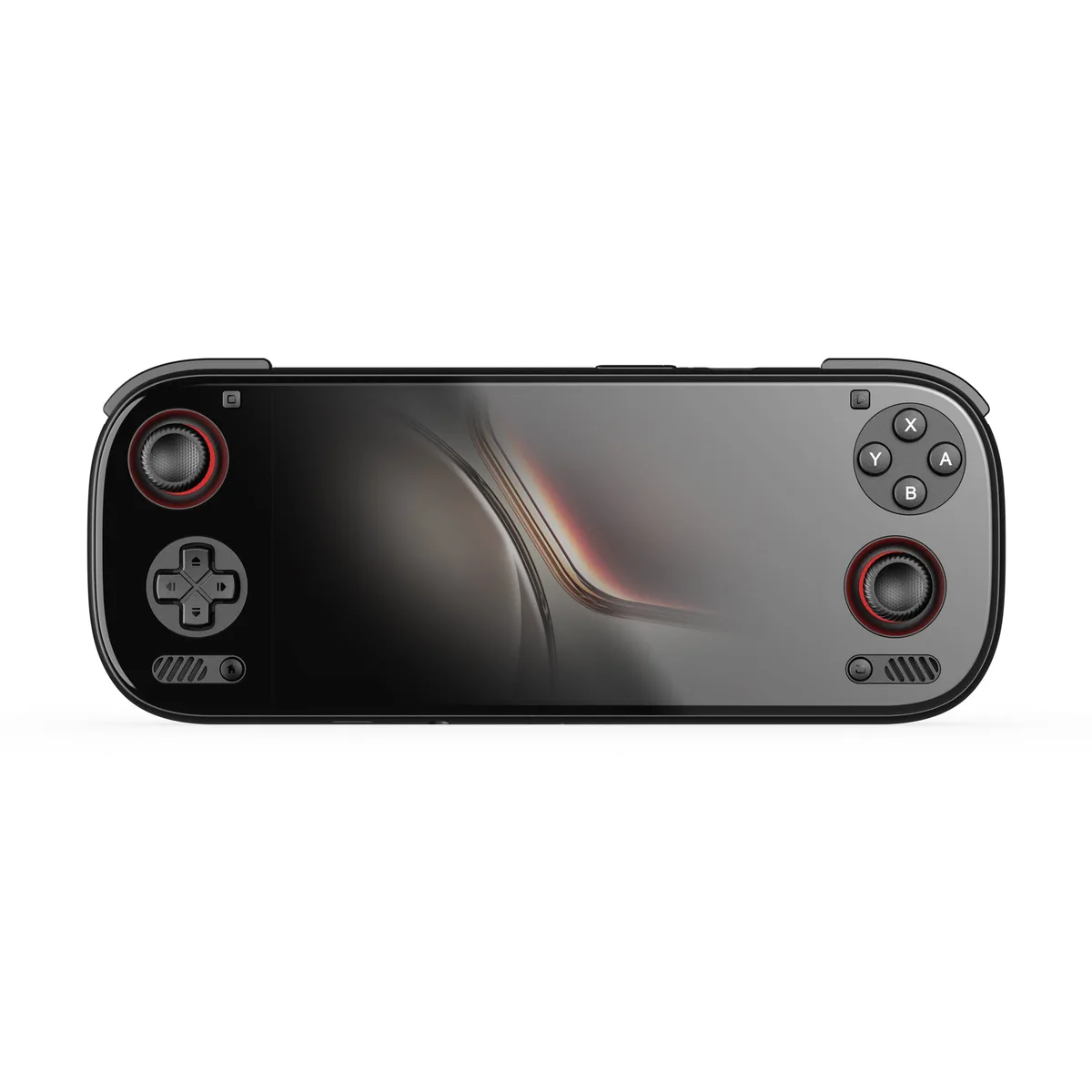
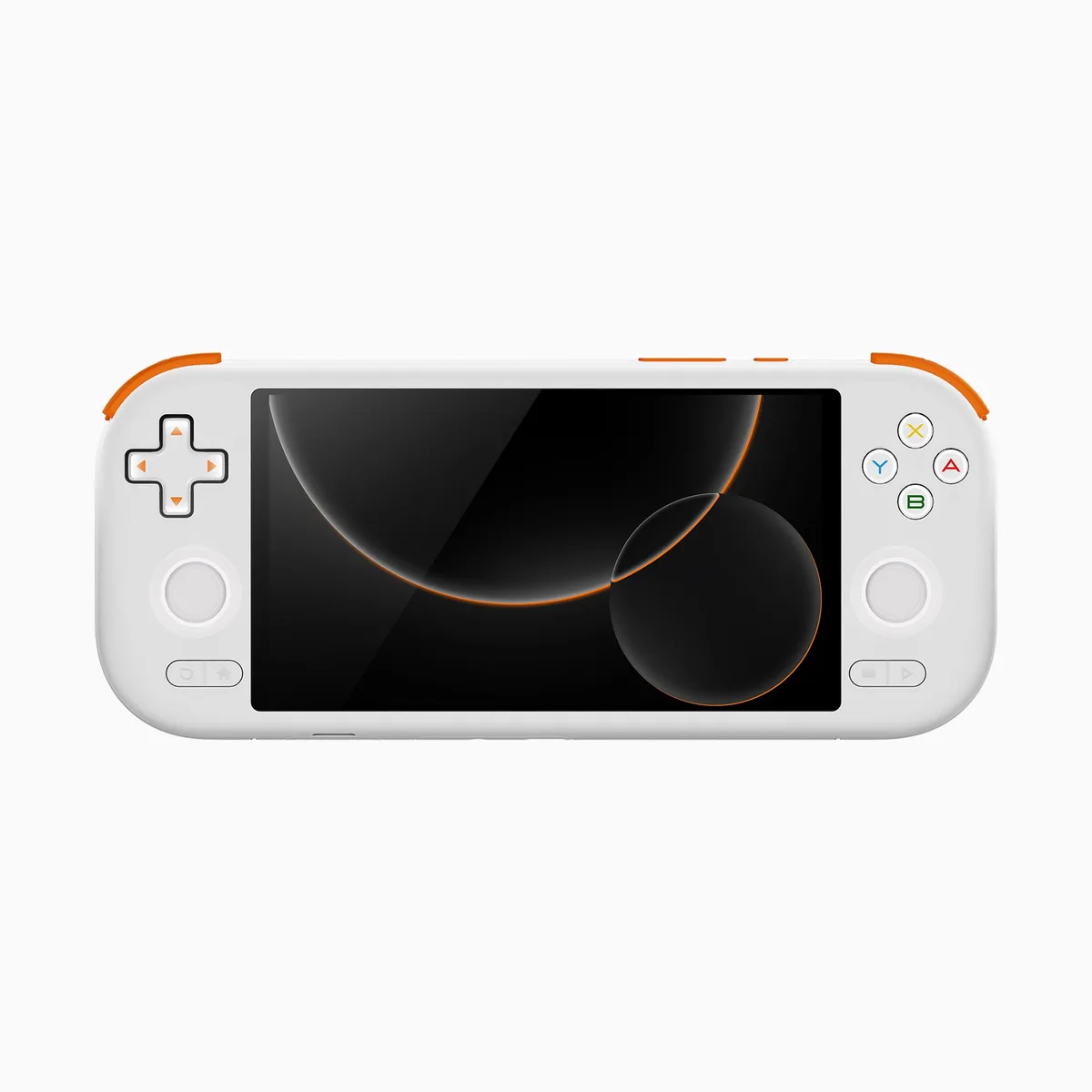
Mangmi Air X
5.5 in IPS, 1920 x 1080 FHD, 400 nits, multi-touch · 5000 mAh · Android 14
UK price not checked
How to read power bank capacity and output against the battery and charging figures retro handheld makers state, with a note on travel.
By Sepehr Sabbagh-pourPublished 16 Oct 2026Updated 9 Nov 20267 min read
A power bank is a portable battery pack that charges a device over USB. For a retro handheld, read three things on its label: capacity with a voltage, the USB-C output steps, and whether it states USB Power Delivery. Then compare them with the handheld maker's stated figures. No brand is named, because none has been sourced.
Makers quote handheld batteries in milliamp hours (mAh). That is a count of charge, and it only becomes a count of energy once you know the voltage. Energy in watt hours (Wh) is the amount of charge in amp hours multiplied by the voltage. Two makers in our catalogue state the voltage, which lets us work it through.
| Device | Stated battery | Energy by our arithmetic |
|---|---|---|
| Miyoo Mini Plus | Li-Po 3.7V 3000mAh | 11.1Wh |
| Mangmi Air X | Lithium-ion 5000mAh/3.85V | 19.25Wh |
| Analogue Pocket | 4300mAh lithium ion | Voltage not stated |
| Retroid Pocket 5 | 5000mAh | Voltage not stated |
| Retroid Pocket 6 | 6000mAh | Voltage not stated |
| Anbernic RG556 | 5500mAh polymer lithium | Voltage not stated |
| AYN Odin 3 | 8000mAh | Voltage not stated |
Sources: Miyoo, Mangmi, Analogue, Anbernic and AYN's Odin 3 page. The Mangmi and Miyoo pages show why mAh alone misleads: the Mangmi is 5000mAh at 3.85V, so each mAh carries slightly more energy than the Miyoo's at 3.7V. Most makers give only mAh, so a Wh figure for those devices would be a guess, and we do not give one.
A power bank label may show mAh, Wh, or both. If the pack states its rated voltage, you can convert it the same way: a pack labelled 10,000mAh at 3.7V works out to 37Wh by the same multiplication. Comparing that with a handheld's energy shows the rough ratio between them. The ratio is an upper bound, because the pack's labelled capacity describes its cells and the pack maker's own specification is the place to look for how much reaches a device. None of the maker pages cited here gives a conversion efficiency, so we make no promise about the number of recharges.
Makers state charging in different forms, so start with the handheld's own page.
The USB-IF describes PD on usb.org as including an adjustable mode in which the powered device can request intermediate voltages up to the charger's maximum. In plain terms, the handheld asks and the supply answers. A pack whose label lists only 5V cannot offer the voltage steps that a 27W or 40W figure points to, so check that its USB-C output lists higher voltage steps; the chargers in our best accessories list show what that looks like. For how to read those lines, see USB-C charging explained.
Take the Mangmi Air X, where both figures are stated: 5000mAh at 3.85V is 19.25Wh by our arithmetic, and the maker lists 15W charging. A hypothetical 37Wh pack, the 10,000mAh at 3.7V example above, holds a little under twice that energy, which is the upper bound on how many full charges it could give before any losses. Dividing 19.25Wh by 15W gives 1.28 hours, which is the shortest time a full charge could take at that rate if the handheld drew 15W throughout. Mangmi does not state a charge time, so this is arithmetic, not a claim about the device.
The exercise shows what the numbers can and cannot tell you. They bound the answer; they do not predict it. Anbernic's RG556 gives the other kind of figure, a maker-stated 3.5 hours to full at 5V/2A, and Powkiddy states 2 hours of charging for the RGB30 and V10, each from its own battery.
With a voltage on both sides, energy in watt hours gives a ratio. The table compares two hypothetical packs, 10,000mAh and 20,000mAh at 3.7V, with the two handhelds whose makers state a voltage.
| Handheld | Energy by arithmetic | Pack of 37Wh | Pack of 74Wh |
|---|---|---|---|
| Miyoo Mini Plus | 11.1Wh | 3.3 times | 6.7 times |
| Mangmi Air X | 19.25Wh | 1.9 times | 3.8 times |
These ratios are ceilings. A pack's labelled capacity describes its cells, and none of the maker pages cited here states how much of it reaches a device, so the true number of full charges is lower. For handhelds that give mAh without a voltage, such as the 8000mAh Odin 3, no honest ratio exists, and guessing a voltage would only invent a figure.
Put the handheld's page and the pack's label side by side, then work through these steps in order.
A pack for a 15W handheld such as the Air X has a lower bar than one for the 27W Pocket Classic or the 60W Odin 3. If the pack's label cannot reach the stated wattage, the makers do not say what happens, so treat that pack as a poor match.
Check before you travel. On its page about electronic devices and electrical items, gov.uk says: "Check the restrictions on certain types of batteries or contact your airline if you're not sure what you can carry." It also says to make sure devices are charged before you travel, and that a device which will not switch on when asked will not be allowed on the aircraft. The page lists mobile phones, laptops and tablets as allowed in hand and hold luggage and notes that some airlines have different restrictions. It does not mention power banks or handheld consoles by name and gives no watt-hour limit, so the pack's Wh figure and your airline's rules are the things to look up. This is another reason a pack that states Wh is easier to deal with than one that gives mAh alone.
A pack helps with long sessions away from a socket, but it does not change the battery-life claim a maker makes. For how to read those claims, see our battery life guide. For other add-ons, including docks and cases, browse accessories, and for wider explainers see guides. Our approach to sourcing is on how we research.
Mangmi
5.5 in IPS, 1920 x 1080 FHD, 400 nits, multi-touch · 5000 mAh · Android 14
UK price not checked
AYN
Pre-order6 in Customized Full HD AMOLED touch screen, 120Hz OLED · 8000 mAh · Android 15
UK price not checked
Accessories
What Valve's Steam Deck Docking Station does, the ports and display outputs it lists, and what any third-party USB-C hub needs to match.
7 min read
Accessories
Six accessories chosen only from maker-listed specs: two chargers, two docks, a screen protector and a carrying case, with a comparison table.
8 min read
Accessories
What handheld makers actually state about their official cases, grips and screen protectors, and the size figures to check before you order one.
7 min read