Retro handheld battery life explained: mAh and maker hours
What mAh means, why the hours on a product page are the maker's own estimate, and how stated capacities and hours compare across 28 handhelds, 17 of which state hours.
By Sepehr Sabbagh-pourPublished 14 Oct 2026Updated 9 Nov 20268 min read
A retro handheld's battery is described by a capacity in mAh and, sometimes, a number of hours. Both are the maker's own figures, and this site has measured neither. Of the 33 catalogue devices that state a capacity in mAh, 20 also state hours, and the two often disagree. The other nine list watt-hours or use AA batteries.
What does mAh mean on a retro handheld?
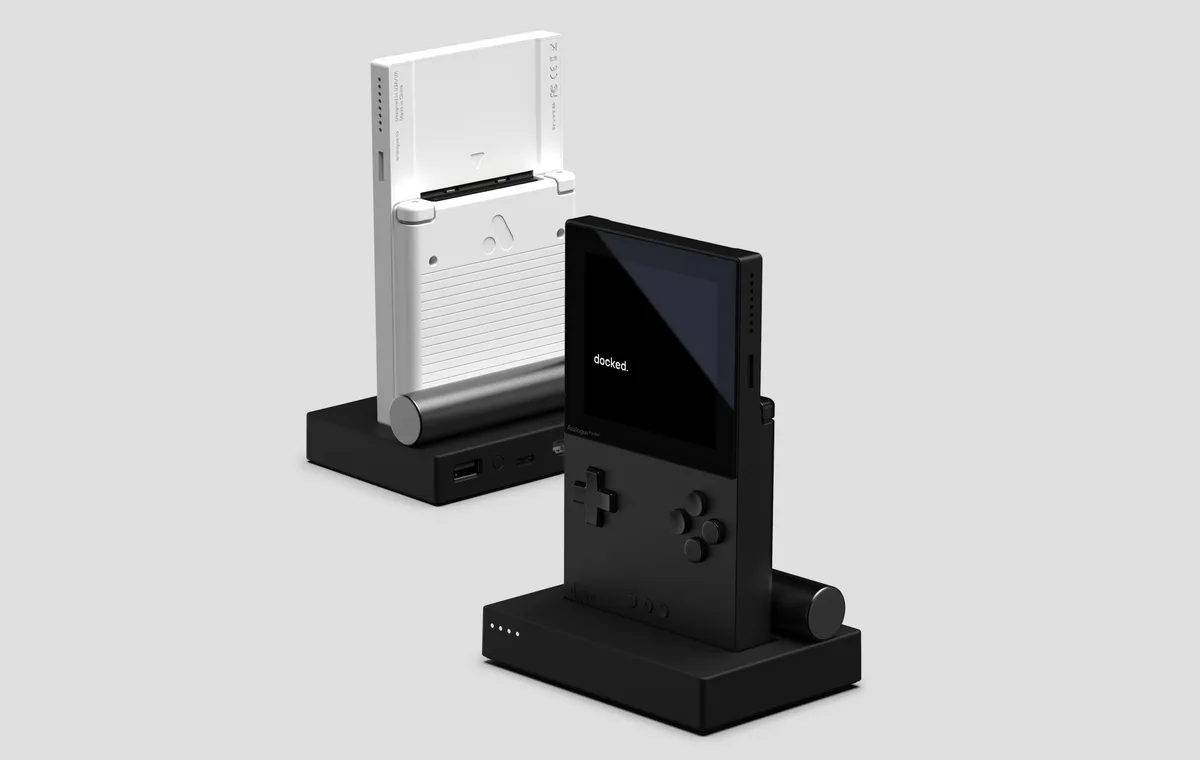
The makers write battery capacity in mAh. Anbernic lists a 5500mAh battery for the Anbernic RG556, and Analogue lists a 4300mAh battery for the Analogue Pocket. Two things follow from how the pages present it.
- The number is a rating the maker prints, and the pages do not state the conditions behind it, so it is not a promise about how long a game session will last.
- A bigger number is a bigger stated capacity, but a device page that gives only mAh leaves the running time open.
Why are the hours the maker's own figures?
Hours of play are stated by the company that sells the device, using conditions it chooses. Our pages repeat them as "the maker states", and nothing here has been timed on a unit. Some makers are open about how loose the figure is.
- Analogue gives "6-10 hour gameplay time and 10+ hour sleep time" and adds a footnote saying the 6 hour figure is "a rough estimation with display at default brightness".
- Mangmi says the Mangmi Air X gives "up to 8 hours" with an asterisk, but the page does not state the conditions behind the asterisk.
- Powkiddy gives "8 hours" for the Powkiddy RGB30 and says nothing on the page about how the figure was produced.
The useful question is not "is 8 hours true?" but "what does the maker say it depends on?". For most devices the page does not say.
What do the capacities and hours look like side by side?
This table lists all 20 catalogue devices where the maker gives both numbers, in order of stated capacity. Trimui pages label their hours as taken from a maker table or image. All figures are as stated on the maker's page, retrieved in October 2026.
| Device | Maker-stated capacity | Maker-stated hours |
|---|---|---|
| Anbernic RG556 | 5500 mAh | 8 hours |
| Mangmi Air X | 5000 mAh | Up to 8 hours (conditions not stated) |
| Trimui Smart Pro S | 5000 mAh | 6 hours (maker table) |
| Trimui Smart Pro | 5000 mAh | 5+ hours (maker image) |
| Anbernic RG405M | 4500 mAh | 7 hours |
| Analogue Pocket | 4300 mAh | 6 to 10 hours |
| Powkiddy RGB30 | 4100 mAh | 8 hours |
| Anbernic RG DS | 4000 mAh | 6 hours |
| Anbernic RG CubeXX | 3800 mAh | 6.5 hours |
| Anbernic RG34XX | 3500 mAh | 7 hours |
| Anbernic RG35XX H | 3300 mAh | 8 hours |
| Anbernic RG35XX Plus | 3300 mAh | 8 hours |
| Anbernic RG35XX SP | 3300 mAh | 8 hours |
| Anbernic RG34XXSP | 3300 mAh | 6 hours |
| Anbernic RG353V | 3200 mAh | 6 hours |
| Anbernic RG40XX H | 3200 mAh | 6 hours |
| Anbernic RG40XX V | 3200 mAh | 6 hours |
| Anbernic RG28XX | 3100 mAh | 8 hours |
| Powkiddy V10 | 3000 mAh | 8 hours |
| Trimui Brick | 3000 mAh | 5 hours (maker table) |
Four patterns stand out, and all of them are about what the makers wrote.
- Same capacity, different hours. The RG35XX SP, RG35XX H, RG35XX Plus and RG34XXSP are all listed at 3300 mAh. Anbernic states 8 hours for the first three and 6 hours for the RG34XXSP. The pages do not say why.
- Same hours, very different capacity. The RG556 (5500 mAh), the RG28XX (3100 mAh) and the Powkiddy V10 (3000 mAh) all state 8 hours.
- A bigger cell, the same claim. The RG405M is listed at 4500 mAh and the RG34XX at 3500 mAh, yet Anbernic states 7 hours for each.
- A bigger cell, fewer hours. The RG DS is listed at 4000 mAh and 6 hours, while the V10 is listed at 3000 mAh and 8 hours, from different makers.
Worked example: what the figures imply for each hour
One way to see how far apart the claims are is to divide a stated capacity by its stated hours. This is arithmetic on two maker claims, not a measurement: it ignores voltage, which most pages do not state, and the makers do not say what screen brightness or game sits behind their hours.
| Device | Stated capacity | Stated hours | mAh per stated hour |
|---|---|---|---|
| Anbernic RG556 | 5500 mAh | 8 | 687.5 |
| Anbernic RG DS | 4000 mAh | 6 | 666.7 |
| Anbernic RG405M | 4500 mAh | 7 | 642.9 |
| Anbernic RG34XXSP | 3300 mAh | 6 | 550.0 |
| Anbernic RG34XX | 3500 mAh | 7 | 500.0 |
| Anbernic RG35XX SP | 3300 mAh | 8 | 412.5 |
| Anbernic RG28XX | 3100 mAh | 8 | 387.5 |
| Powkiddy V10 | 3000 mAh | 8 | 375.0 |
The spread is wide. The RG556 claim assumes about 687.5 mAh used per hour, roughly 1.8 times the 375 mAh per hour that the V10 claim assumes, even though both state 8 hours. The pages do not explain the gap. The RG556 lists a larger AMOLED screen and a fan, but no maker links either to running time, so we do not claim an effect. A lower figure only means the maker's hours claim asks less of the cell; it does not say what you will get.
The same sum works as a sanity check on any page you find. If a maker states a small capacity and a long number of hours, the implied figure will sit near the bottom of this table, and the missing conditions matter more. If the page states no hours at all, there is nothing to divide.
Which devices state a capacity but no hours?
Thirteen devices give only the capacity. For these there is no maker hours figure on the page, so the only battery fact we can offer is the stated capacity.
- Retroid lists 5000 mAh for the Retroid Pocket 5, the Retroid Pocket Flip 2, the Retroid Pocket 4 Pro and the Retroid Pocket Classic, and 6000 mAh for the Retroid Pocket 6.
- AYN lists 6000 mAh for the AYN Thor and 8000 mAh for both the AYN Odin 3 and the AYN Odin2 Portal, and states nothing about battery life.
- Ayaneo lists 8000 mAh for the Ayaneo Pocket DS and 6000 mAh for the Ayaneo Pocket S.
- The Miyoo A30 is listed at 2600 mAh, and the Miyoo Mini Plus and Miyoo Flip V2 at 3000 mAh (the Mini Plus as a Li-Po 3.7V cell, as the maker writes it).
For the thirteen devices with no hours figure, the other stated facts are the only guide. The table gathers what each maker lists about capacity, charging and weight, with "Not stated" where the page is silent.
| Device | Stated capacity | Stated charging | Stated weight |
|---|---|---|---|
| Retroid Pocket Classic | 5000 mAh | 27W | 223 g |
| Retroid Pocket 4 Pro | 5000 mAh | Fast charging, no wattage | 261 g |
| Retroid Pocket 5 | 5000 mAh | 27W | 280 g |
| Retroid Pocket Flip 2 | 5000 mAh | Not stated | 306 g |
| Retroid Pocket 6 | 6000 mAh | Not stated | Not stated |
| AYN Thor | 6000 mAh | Not stated | 380 g |
| AYN Odin 3 | 8000 mAh | 60W | 390 g |
| AYN Odin2 Portal | 8000 mAh | 27W | 430 g |
| AYANEO Pocket S | 6000 mAh | Up to 40W PD | 350 g |
| AYANEO Pocket DS | 8000 mAh | PD fast charging, no wattage | Not stated |
| Miyoo A30 | 2600 mAh | Not stated | Not stated |
| Miyoo Mini Plus | 3000 mAh | Not stated | Not stated |
| Miyoo Flip V2 | 3000 mAh | Not stated | Not stated |
Weight is the other cost of a large cell: the 8000 mAh Odin 3 states 390 g, while the 5000 mAh Pocket Classic states 223 g. The range across the 33 devices that state mAh runs from 2600 mAh (Miyoo A30) up to 8000 mAh (AYN Odin 3, AYN Odin2 Portal and Ayaneo Pocket DS). Handheld PCs such as the Steam Deck list watt-hours instead, which are not comparable with mAh without a voltage.
What do the makers' pages say about running time?
We cannot give measured answers, so this section sticks to what the makers' own pages reveal.
- Screen brightness. Analogue's footnote ties its 6 hour figure to the display being at its default brightness. It is the one maker statement in the catalogue that names a variable.
- Unstated conditions. Where the page does not name the conditions, as with the Mangmi asterisk and the Powkiddy figure, the hours cannot be compared with another maker's figure.
- Listed but not explained. Pages list screen sizes, refresh rates, chips and cooling. For example, Retroid lists active cooling on the Retroid Pocket 5 and a 120 Hz refresh for the Retroid Pocket 6. No maker page says how these relate to running time, so we do not claim an effect.
The summary is that makers state what the cell is rated at, and rarely what the device draws. Our research method is to report both as stated and to say when one is missing.
How long does charging take?
Charging figures are less consistent than runtime. Anbernic states 5V/2A charging and about 3.5 hours to full for the RG556, and about 2 hours of charging time for the RG405M. Powkiddy states a 2 hour charge time for the RGB30 and the V10. Retroid states 27W charging for the Retroid Pocket 5 and Pocket Classic, and fast charging without a wattage for the Pocket 4 Pro. Mangmi states 15W for the Air X. Several pages give a charger rating or nothing, and the Retroid Pocket 6 page lists no charging figure.
How should you use these figures when choosing?
- Compare mAh with mAh, and maker hours with maker hours, but do not compare across the two columns as if they were the same kind of fact.
- Check whether the page gives conditions. If it does not, treat the hours figure as the maker's claim only.
- If a device lists capacity only, treat its battery life as unknown rather than assuming it matches a similar-sized cell elsewhere.
- Divide capacity by stated hours when two devices claim the same hours. A large gap in the result tells you the claims rest on different assumptions.
- Look at charging and weight next to capacity. A large cell that the maker pairs with no stated charging figure leaves two questions open instead of one.
For wider context see how to read retro handheld specs, then use how to choose a retro handheld to put battery next to budget, screen and operating system. Battery sits alongside the chip: retro handheld chips explained covers what the processor rows say.
Devices in this guide
Anbernic
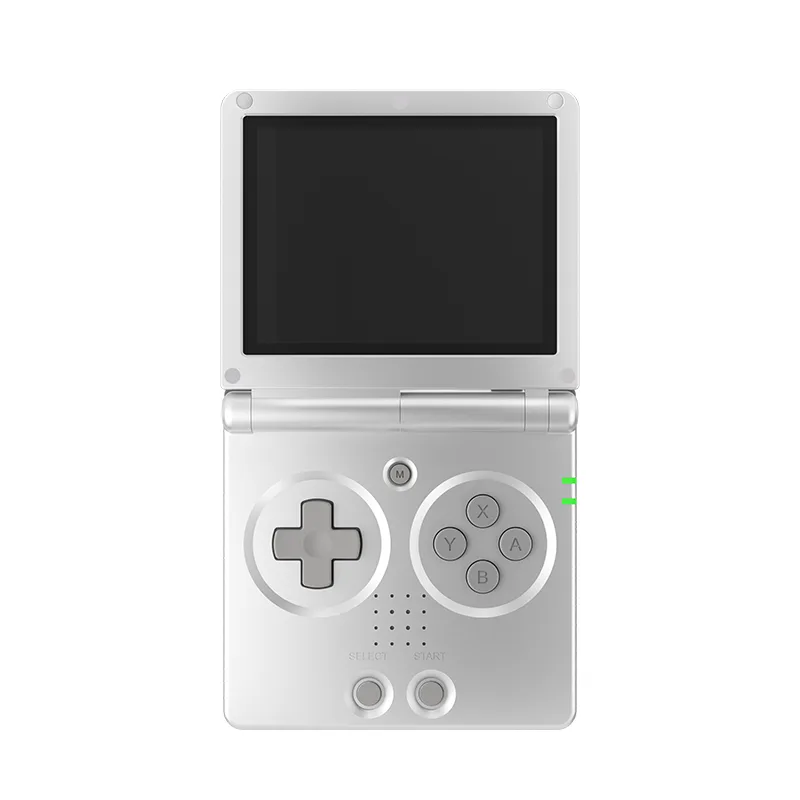
Anbernic RG35XX SP
3.5 in IPS, full viewing angle, OCA full lamination · 3300 mAh · Linux 64-bit
UK price not checked
Anbernic
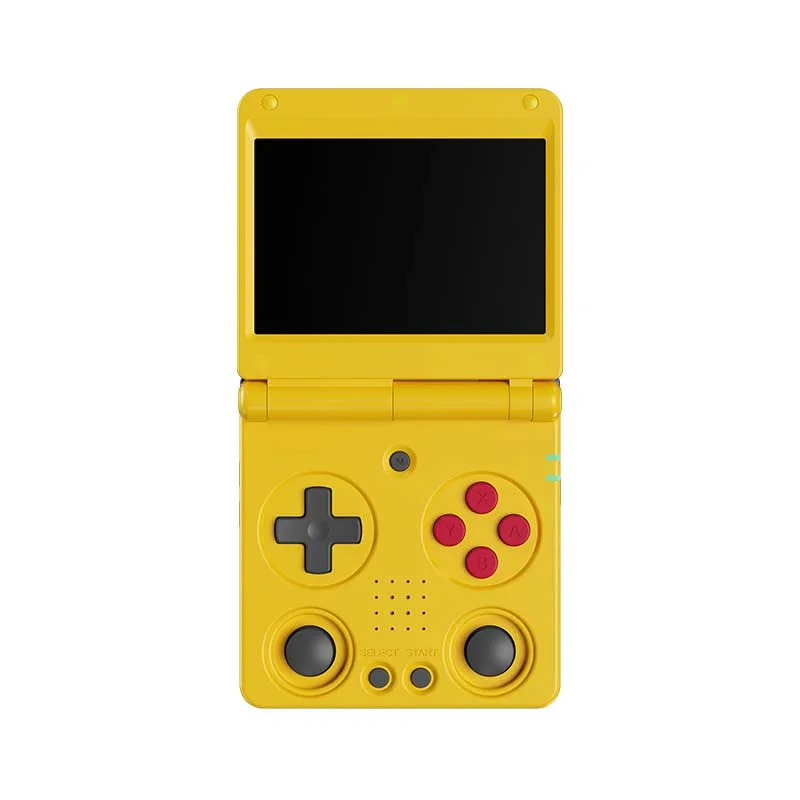
Anbernic RG34XXSP
3.4 in IPS, full viewing angle, OCA full lamination · 3300 mAh · Linux 64-bit
UK price not checked
Mangmi
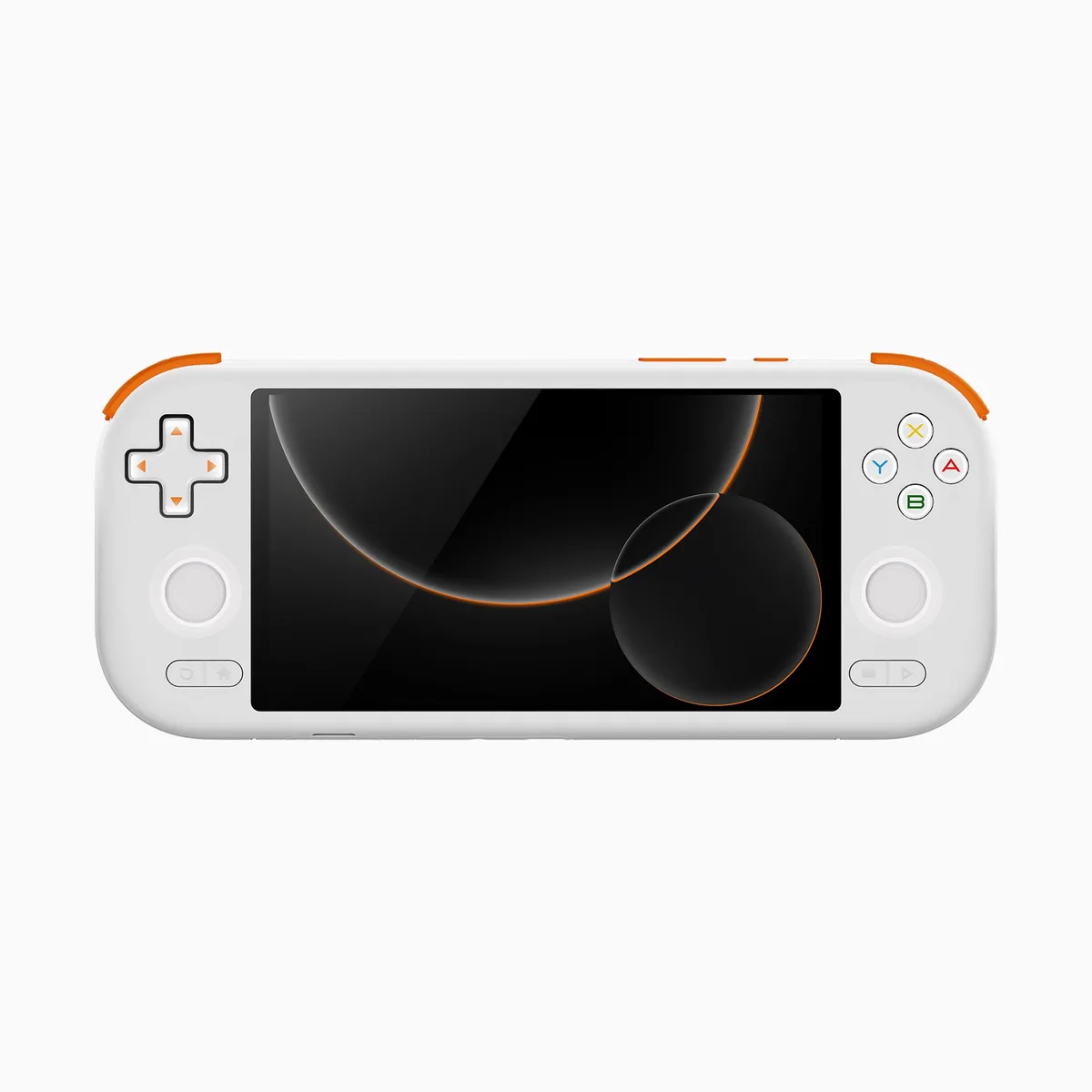
Mangmi Air X
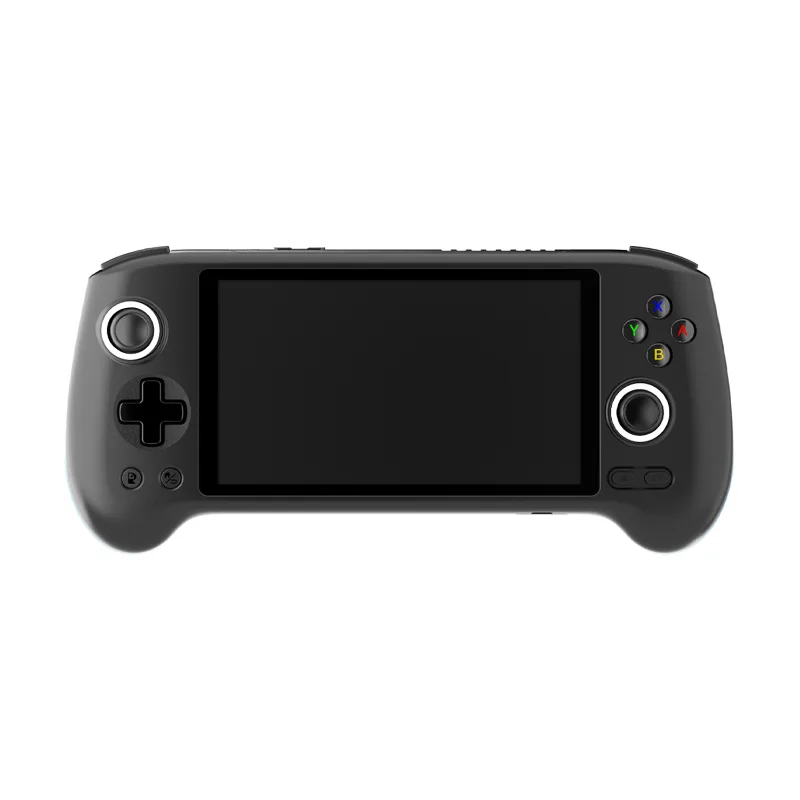
5.5 in IPS, 1920 x 1080 FHD, 400 nits, multi-touch · 5000 mAh · Android 14
UK price not checked
Frequently asked questions
- What does mAh mean on a retro handheld?
- It is the unit the makers use to state battery capacity, milliamp hours. It is a capacity figure the maker prints rather than a playing-time promise, and the maker pages do not convert it into hours of play. It also cannot be turned into energy without a voltage, and only a few pages state one. Of the 33 devices in the catalogue that state a capacity in mAh, 20 also state hours, and the capacities run from 2600 mAh on the Miyoo A30 to 8000 mAh on the AYN Odin 3, the AYN Odin2 Portal and the Ayaneo Pocket DS.
- Are the battery hours on product pages tested?
- They are the maker's own figures, and PlayGearHQ has not measured any device. Analogue calls its 6 hour figure a rough estimation with the display at default brightness, which is the one maker statement in the catalogue that names a condition. Mangmi marks its up to 8 hours with an asterisk but does not state the conditions behind it, and Powkiddy gives 8 hours for the RGB30 with no explanation. Without stated conditions, one maker's hours cannot be compared with another's.
- Which catalogue device lists the largest battery?
- The AYN Odin 3, the AYN Odin2 Portal and the Ayaneo Pocket DS are each listed at 8000 mAh by their makers. None of the maker pages states hours of battery life, so the capacity is all we can report. The Odin 3 lists 60W charging and a stated 390 g, the Odin2 Portal 27W and 430 g, and the Pocket DS PD fast charging without a wattage and no weight. Among devices that do state hours, the largest capacity is the Anbernic RG556 at 5500 mAh, with a stated 8 hours.
- Does a higher mAh figure always mean longer battery life?
- Not on the evidence of the makers' pages. Anbernic states 8 hours for both the 5500 mAh RG556 and the 3100 mAh RG28XX, and gives different hours for the 3300 mAh RG35XX SP (8 hours) and RG34XXSP (6 hours). Dividing capacity by stated hours gives about 687.5 mAh per hour for the RG556 and 387.5 for the RG28XX, so the two claims rest on very different assumptions. The pages do not say what those assumptions are, so a bigger cell is not proof of a longer session.
Sources
More from Guides
Guides
Retro handheld chips explained: H700, Snapdragon and more
Decodes the chip names makers list on retro handhelds, explains our entry, mid, high and flagship tiers, and says what those tiers cannot tell you.
8 min read
Guides
microSD cards for retro handhelds: sizes, classes and slots
What the card does in a retro handheld, what makers state about slots and maximum sizes, and what the SD Association capacity and speed labels mean.
7 min read
Guides
IPS vs OLED vs LCD retro handheld screens: stated labels and figures
Compares the IPS, OLED and LCD labels across 34 retro handhelds, with stated sizes and resolutions and pixel density worked out from the maker's figures. It does not explain how the panel types work.
7 min read