USB-C charging for handhelds: PD, wattage and cables explained
What USB Power Delivery is, what handheld makers state about charging, and what to check on a charger and cable before you plug in.
By Sepehr Sabbagh-pourPublished 16 Oct 2026Updated 9 Nov 20267 min read

USB-C is the connector many handhelds charge through, and USB Power Delivery (PD) lets a charger and a device agree a voltage. Read the wattage your handheld's maker states, then match it to the voltage steps on the charger's USB-C line. Several makers state a wattage and nothing else, which this guide covers (retro handheld catalogue).
What is USB Power Delivery?
USB PD is a set of rules for negotiating power over a USB Type-C connection. The USB Implementers Forum (USB-IF) describes the PD 3.1 update on usb.org as raising the ceiling from 100W, which it gives as 20V at 5A, to "up to 240W" through new 28V, 36V and 48V fixed voltages. It also describes an adjustable voltage mode in which the device being powered can request intermediate voltages between 15V and the charger's maximum fixed voltage.
Two practical points follow from that wording. First, voltage is negotiated, so a charger that lists several voltage steps is offering choices and the device picks. Second, the 240W level is tied to a "full featured" Type-C cable defined in Type-C Release 2.1, so the cable is part of the standard and not an afterthought. The highest wattage the catalogue lists for any handheld is a 65W adapter (the ROG Ally X and Legion Go), so the high end of the standard is background rather than a buying target.
What charging figures do handheld makers state?
The figures vary in form. Some makers give volts and amps, some give watts, and some give only a phrase such as fast charging. Multiplying volts by amps gives watts, so 5V at 1.5A is 7.5W and 5V at 2A is 10W. That is our arithmetic on the maker's figures, not a maker claim.
| Device | Stated charging | Stated battery |
|---|---|---|
| Anbernic RG35XX SP | 5V/1.5A, supports C2C charger | 3300 mAh |
| Anbernic RG556 | 5V/2A, about 3.5 hours to full | 5500 mAh |
| Anbernic RG28XX | 5V/2A | 3100 mAh |
| Mangmi Air X | 15W | 5000 mAh |
| Retroid Pocket 5 | 27W | 5000 mAh |
| Retroid Pocket Classic | 27W | 5000 mAh |
| AYANEO Pocket S | Up to 40W PD; charger not included | 6000 mAh |
| AYN Odin 3 | 60W | 8000 mAh |
| AYANEO Pocket DS | PD fast charging, wattage not stated | 8000 mAh |
| Analogue Pocket | USB-C charging, wattage not stated | 4300 mAh |
Sources: Anbernic's RG556 and RG35XX SP pages, Mangmi's Air X page, Retroid's Pocket Classic page, AYANEO's Pocket S page and Analogue's Pocket page. The Pocket 5, RG28XX, Odin 3 and Pocket DS figures come from the maker spec listings recorded for those devices, some of which sit in spec images rather than page text. Retroid's Pocket 5 page text, for example, repeats only the 5000 mAh figure.
Does a more powerful charger charge a handheld faster?
Not necessarily, and the makers' pages do not say it does. A stated charging figure is best read as what the device is built to take. Because PD lets the device request its voltage, a charger rated above the handheld's stated figure is a matter of headroom, and no maker we cite promises a faster charge from one. The one claim about speed in our sources is Anbernic's, which states about 3.5 hours to a full charge for the RG556 at 5V/2A.
The other direction is the one to watch. A charger that offers only 5V steps cannot supply the higher voltages that a 27W or 40W figure implies, because 27W at 5V would need more than 5A. Check the label for voltage steps, not only the headline watts.
How do you read a charger label?
Look for the USB-C output line. Two real examples show the pattern. Retroid's official 35W charger lists a USB-C output of 5V 3A, 9V 3A, 12V 2.9A, 15V 2.33A and 20V 1.75A (35W max) and a USB-A output of 18W max. Retroid's page never names Power Delivery, so the label alone does not say how the steps are negotiated. AYN's official charger, titled 65W, lists PD output steps up to 20V at 3.25A, which multiplies to 65W, plus separate programmable (PPS) ranges. It also lists a combined USB-C plus USB-A figure of 45W plus 18W max, so the 65W is the single-port figure. Both are covered in our best accessories list.
When you compare a label with a handheld's stated figure, work down this list:
- Is there a USB-C output at all, or only USB-A?
- Does the USB-C line list several voltage steps, such as 9V or 15V, if your device states 15W or more?
- What is the single-port wattage, as opposed to the combined total across ports?
- Does the maker of your handheld say Power Delivery, or give only a wattage?
Worked example: checking two labels against stated figures
Multiplying volts by amps turns each line of a label into watts. The table applies that to the Retroid 35W charger label quoted above. The arithmetic is ours; Retroid prints only the volts and amps.
| USB-C output step | Volts x amps | Watts by arithmetic |
|---|---|---|
| 5V 3A | 5 x 3 | 15W |
| 9V 3A | 9 x 3 | 27W |
| 12V 2.9A | 12 x 2.9 | 34.8W |
| 15V 2.33A | 15 x 2.33 | 34.95W |
| 20V 1.75A | 20 x 1.75 | 35W |
The 9V step works out to 27W, the same figure Retroid states for the Pocket Classic and Pocket 5. That match is arithmetic, not a maker claim: Retroid does not say which step a handheld asks for. The AYN label gives the other half of the picture, since 20V at 3.25A is 65W against the 60W AYN states for the Odin 3, so the label sits above the stated figure.
Next, set each handheld's stated figure against what a label would need to show.
| Stated figure | Watts by arithmetic | Look for on the USB-C line |
|---|---|---|
| RG35XX SP: 5V/1.5A | 7.5W | 5V at 1.5A or more |
| RG28XX, RG556: 5V/2A | 10W | 5V at 2A or more |
| Mangmi Air X: 15W | 15W | One port giving at least 15W, such as 5V 3A |
| Pocket Classic, Pocket 5: 27W | 27W | A higher voltage step reaching 27W, such as 9V 3A |
| AYANEO Pocket S: up to 40W PD | 40W | PD steps reaching 40W; a 35W label falls short of the ceiling |
| AYN Odin 3: 60W | 60W | A single-port figure of 60W or more |
Take a hypothetical phone charger labelled 5V 3A and 9V 2.22A, which is 20W at its top step. Against the Pocket Classic's 27W it falls short by 7W. The makers do not say whether a handheld then charges more slowly, charges at all, or warns the user, so the sensible reading is that the label is below the stated figure and the outcome is unknown. A charger at or above the stated figure removes that question; it does not promise a faster charge.
usb.org adds one more point. It says PD lets low-power devices "negotiate for only the power they require", so a larger charger is not forced onto a smaller device. That is why headroom costs nothing in the standard, even though it buys nothing in speed.
What should you know about the cable and the box?
Makers say little about cables. Anbernic's RG DS page lists a Type-C charging cable in the box and the RG28XX listing does the same, but neither states a cable rating. USB-IF ties its highest power level to a specific cable specification, which suggests a rating matters at that end, but no handheld maker we cite states a cable requirement. AYANEO is explicit that the Pocket S charger is not included, so a new buyer needs to bring one.
Anbernic describes several devices as supporting a "C2C charger". The maker does not define the term; our reading is a charger fitted with a USB-C socket, used with a USB-C to USB-C cable. Treat that as an interpretation and not a specification.
How does charging relate to battery life?
Charging figures describe how power goes in, and battery-life claims describe how long it lasts, and the two are separate. Makers give hours of play without saying how they measured them. Our battery life guide covers how to read those claims, and the guide to reading specs covers the wider list of figures. If you want portable power away from a socket, see power banks for handheld gaming. For TV output over the same USB-C port, see docks and TV output.
All our content is research from maker pages and standards bodies, and we do not test chargers; see how we research. Browse more in accessories and guides.
Related guides
Devices in this guide
AYN
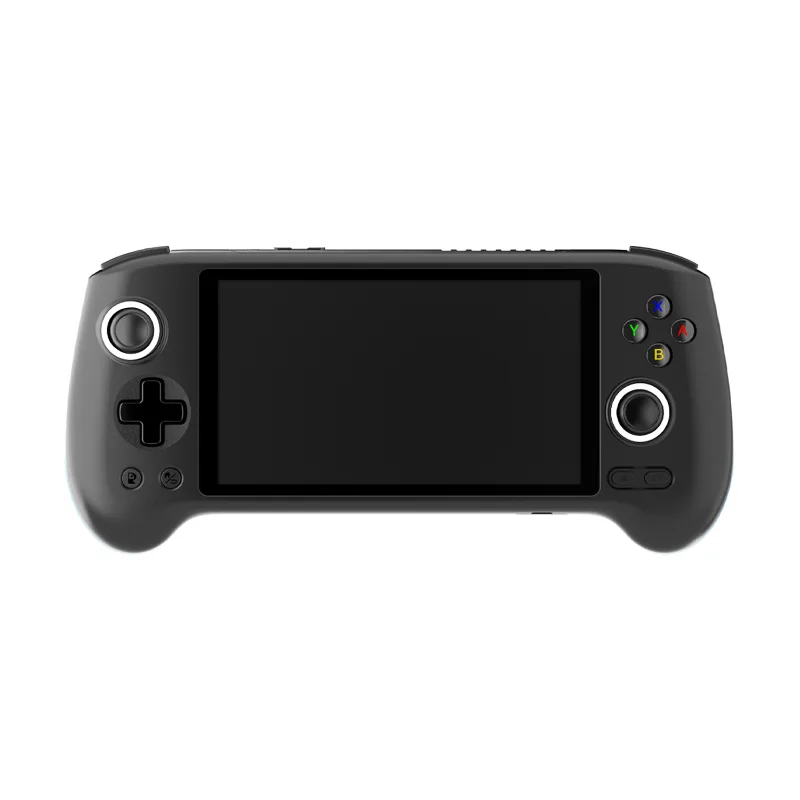
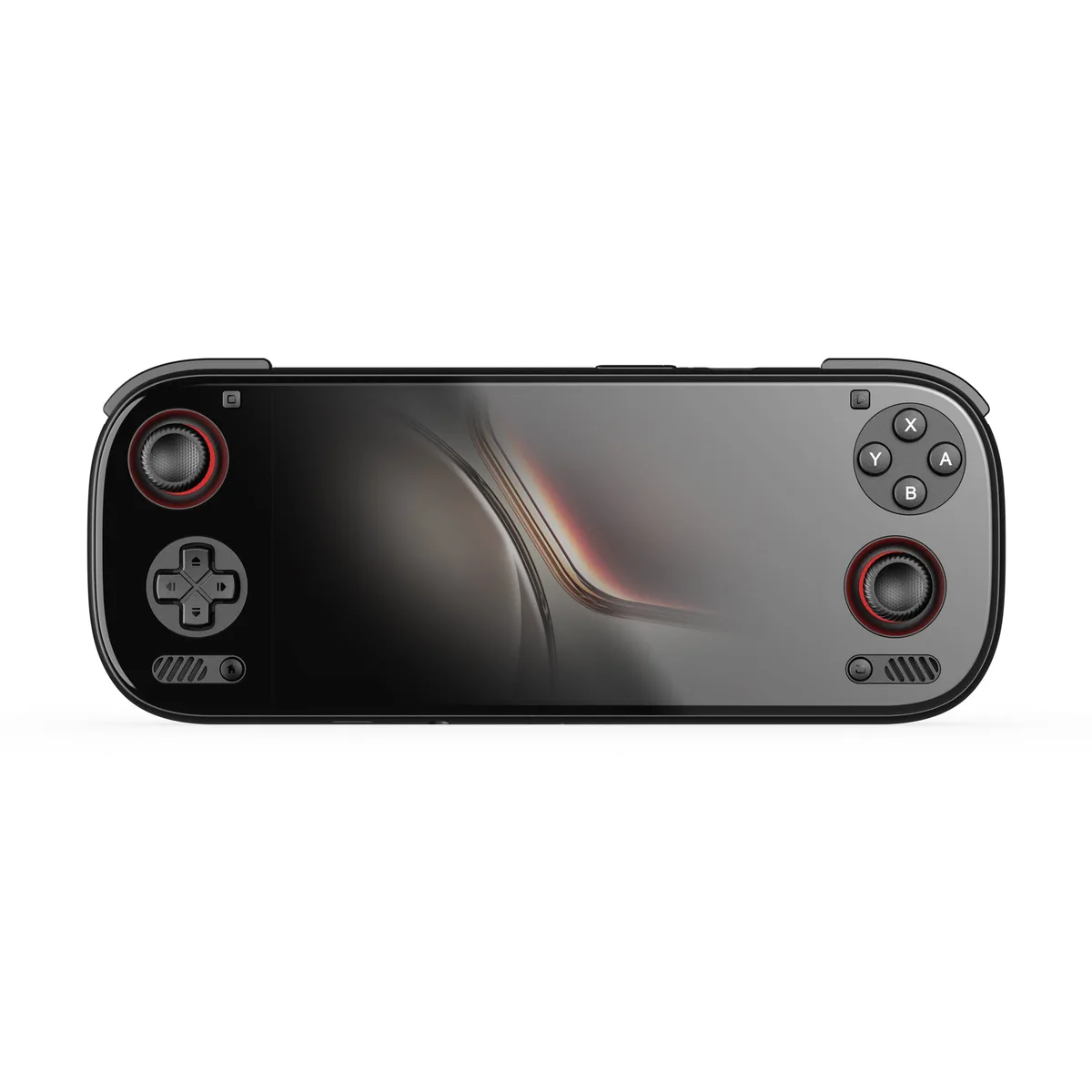
Pre-orderAYN Odin 3
6 in Customized Full HD AMOLED touch screen, 120Hz OLED · 8000 mAh · Android 15
UK price not checked
Frequently asked questions
- What charging does the Retroid Pocket Classic state?
- Retroid states a 5000mAh battery that supports 27W charging. The maker page does not say whether this is USB Power Delivery, and it gives no charge time. The Retroid 35W charger label lists a 9V 3A step, which is 27W by volts multiplied by amps, but Retroid does not say the handheld uses that step. The Pocket Classic page also lists no hours-of-play figure, so charging speed and playing time are both unknown from the maker's pages.
- Is the AYANEO Pocket S charger included?
- No. AYANEO states USB 3.2 Gen 2 Type-C charging up to 40W PD and notes in its spec sheet that the charger is not included, so you need to supply one. The maker states a 6000mAh battery and a weight of 350 g. Because the figure is up to 40W, a charger label that tops out at 35W, like the Retroid example in this guide, sits below the stated ceiling. The maker does not say what happens with a lower-rated charger, so check the label's USB-C steps before buying.
- What does 5V/1.5A mean in watts?
- Watts are volts multiplied by amps, so 5V at 1.5A is 7.5W. Anbernic lists 5V/1.5A for the RG35XX SP and RG34XXSP and 5V/2A, which is 10W, for the RG28XX and RG556. The same sum applies to charger labels: 9V at 3A is 27W and 20V at 3.25A is 65W. This is our arithmetic on the stated figures, not a maker claim, and it says nothing about charge time, which only the RG556 page states, at about 3.5 hours.
- What is the maximum power in USB PD?
- USB-IF states on usb.org that PD revision 3.1 enables up to 240W over a full featured Type-C cable, using new 28V, 36V and 48V fixed voltages that give 140W, 180W and 240W. Before that update the limit was 100W, given as 20V at 5A. The highest charging figure among the handhelds in our table is 60W on the AYN Odin 3, and the highest adapter the catalogue lists for any handheld is 65W, so the top of the standard is background rather than a buying target.
- Can I use any USB-C charger with my handheld?
- The makers do not say. Compare the charger label with the figure your handheld's maker states and check that the USB-C output lists voltage steps, not only 5V. A charger that offers only 5V cannot reach 27W without more than 5A. usb.org describes PD as a negotiation in which the device asks for the power it needs, so a charger rated above the stated figure is headroom. One rated below it leaves the outcome unknown, because no maker page describes that case.
Sources
- USB Power Delivery (USB-IF)
- Anbernic RG556 (maker product page)
- Anbernic RG35XX SP (maker product page)
- Retroid Pocket Classic (maker product page)
- AYANEO Pocket S (maker product page)
- Mangmi Air X (maker product page)
- Analogue Pocket (maker product page)
- Retroid Official 35w Charger (maker store)
- AYN Official PD 65w Fast Charger (maker store)
More from Accessories
Accessories
Steam Deck dock explained: ports, outputs and what a hub needs
What Valve's Steam Deck Docking Station does, the ports and display outputs it lists, and what any third-party USB-C hub needs to match.
7 min read
Accessories
Power banks for handheld gaming: capacity, PD output and what to check
How to read power bank capacity and output against the battery and charging figures retro handheld makers state, with a note on travel.
7 min read
Accessories
Best accessories for retro handhelds: chargers, docks and cases
Six accessories chosen only from maker-listed specs: two chargers, two docks, a screen protector and a carrying case, with a comparison table.
8 min read