How to read retro handheld specs, row by row
Every spec row on a PlayGearHQ device page explained with catalogue examples, including what "not stated by the maker" tells you.
By Sepehr Sabbagh-pourPublished 14 Oct 2026Updated 9 Nov 20267 min read

Each PlayGearHQ device page is a grid of spec rows, and every value is the maker's own. When the maker is silent, the row says "not stated by the maker". This guide walks the rows in page order, with catalogue examples of what each one tells you and where it can mislead.
What does "not stated by the maker" mean?
It means exactly that: the maker's product page does not give the value, so we do not fill it in. We do not borrow numbers from memory, retailers, forums or videos, and we have not handled any device (see how we research). A blank is therefore information. It tells you the one place that should know has not said.
Some examples from the catalogue:
- The Miyoo A30 page does not state weight, dimensions or Bluetooth support, and the Retroid Pocket 6 page states a size but no weight.
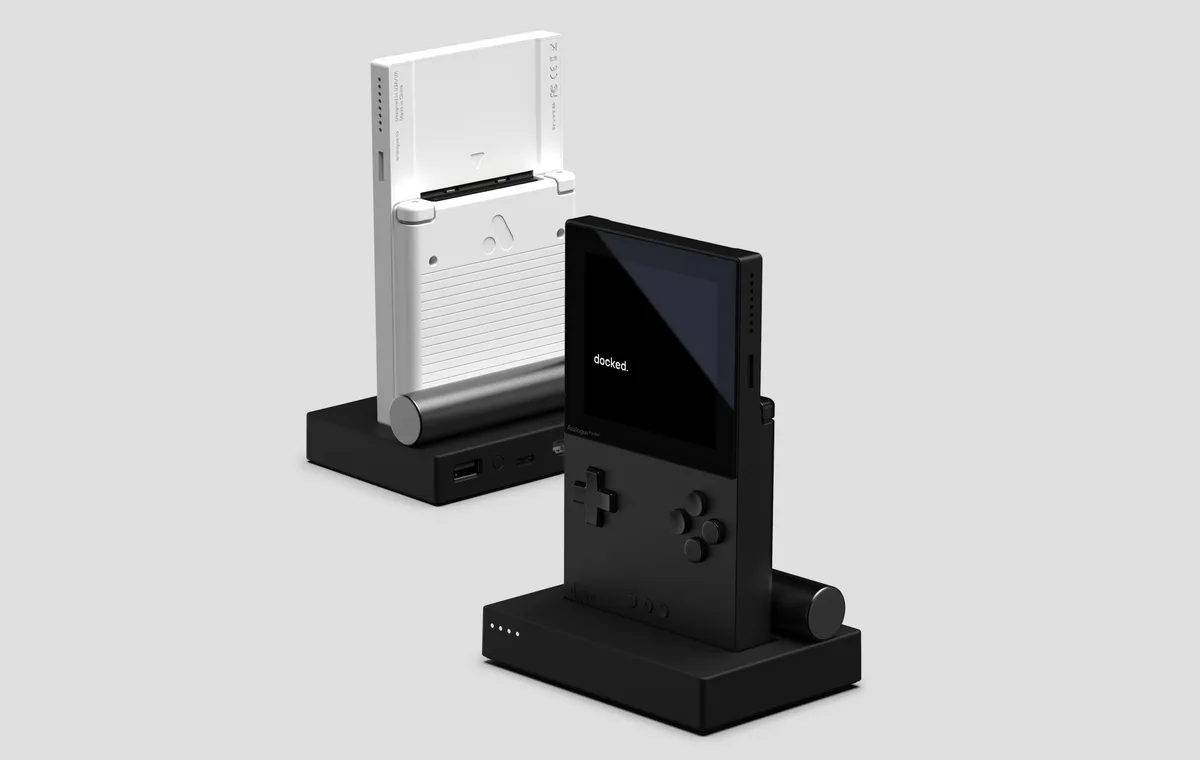
- The Analogue Pocket states two FPGAs without giving the model, and its weight and size appear only as a technical drawing, so neither is listed.
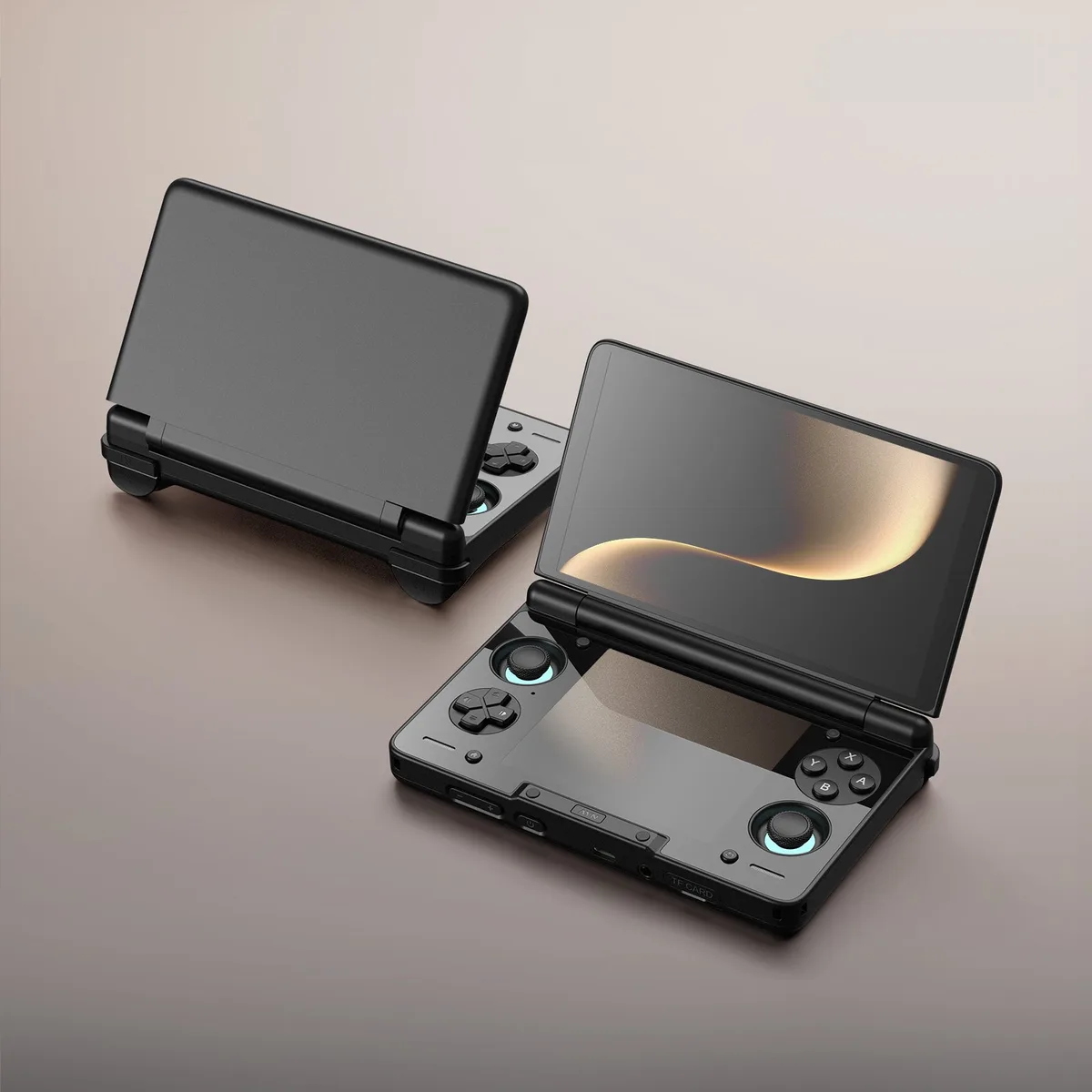
- The Ayaneo Pocket DS page states no weight, dimensions or Wi-Fi version, and lists RAM only as combined RAM and storage options.
What are the chip, CPU and GPU rows?
The chip row names the main processor package, the CPU row describes its processor cores and the GPU row names the graphics part. A maker may give one without the others, which is why the rows are separate.
- The Anbernic RG556 gives all three: a Unisoc T820, cores listed as one A76 at 2.7GHz, three A76 at 2.3GHz and four A55 at 2.1GHz, and a quad-core Mali-G57 at 850MHz.
- The Powkiddy V10 names cores (quad-core Cortex-A35 at 1.5GHz) and a GPU the maker spells "Mail-G31", but no chip, so we copy the spelling as written and leave the chip blank.
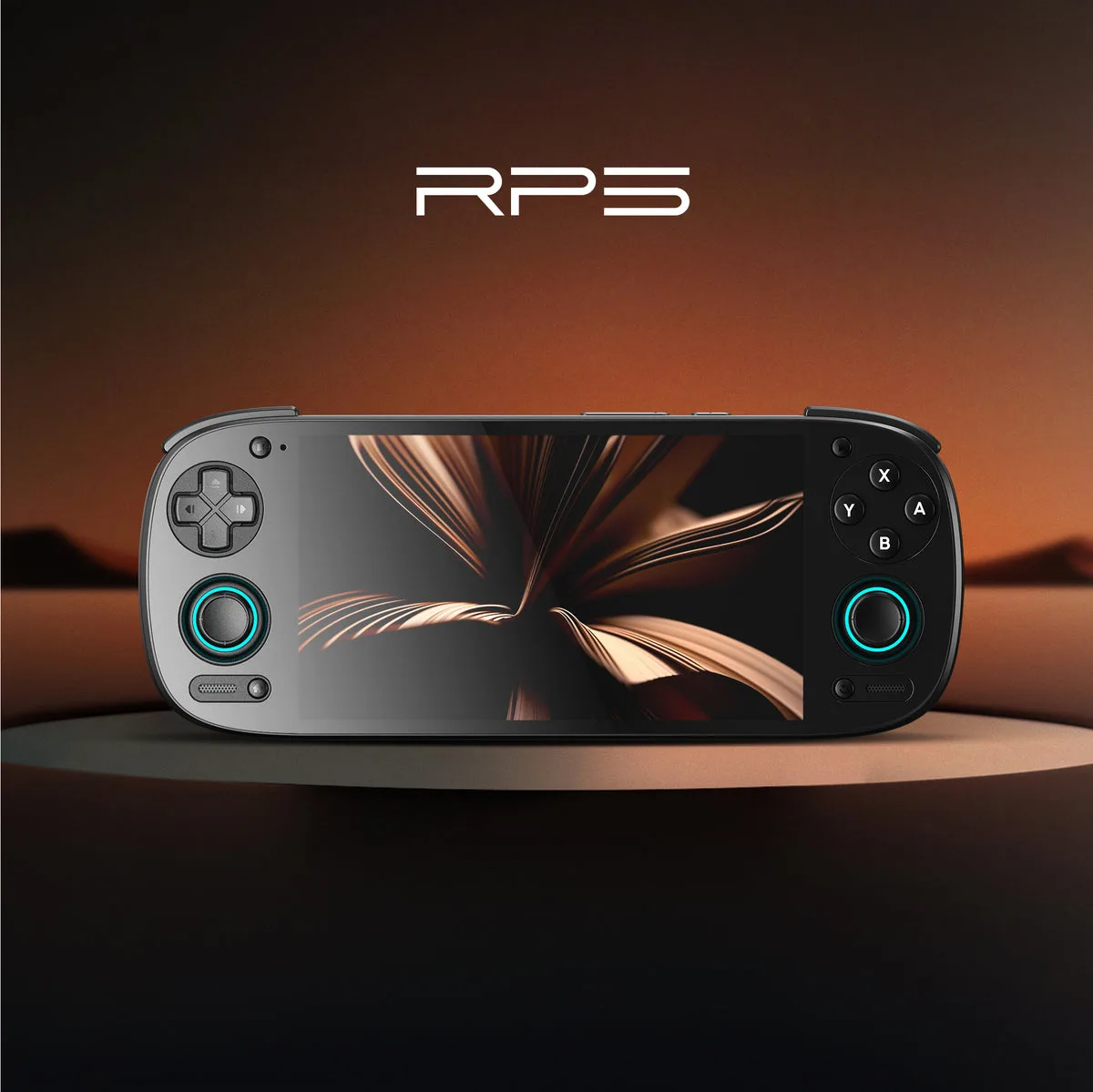
- The AYN Thor has variants: the maker names an SD865 for the Lite and an 8 Gen 2 for Base, Pro and Max. The row reflects that split rather than picking one.
Our catalogue also carries a tier label (entry, mid, high or flagship) for 31 of the 34 retro handhelds. It is an editorial grouping, not a score or a performance claim. Chip families are explained in retro handheld chips explained.
What does the RAM row tell you?
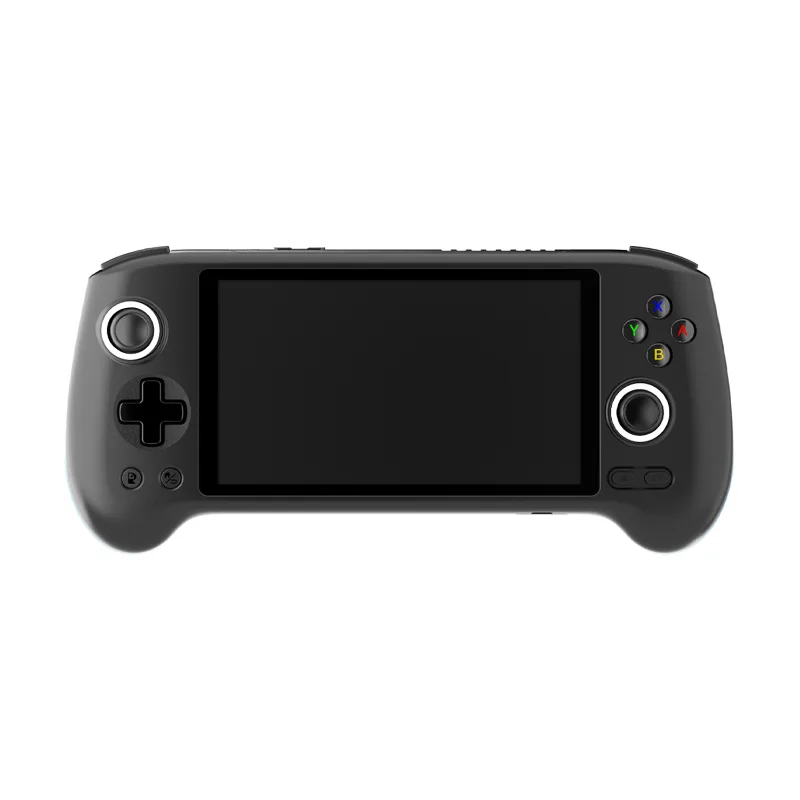
The RAM row gives the figure the maker states, and where there are options we use the base one and say so. The catalogue runs from 512MB on the Miyoo A30 and 1GB on the Anbernic RG35XX family up to 24GB on the top AYN Odin 3 configuration (Ultra), with 16GB on the AYN Thor Max and 16GB options on the Ayaneo Pocket S and Pocket DS. The Retroid Pocket 6 is listed at 8GB or 12GB. The Retroid Pocket 5 shows a conflict: its page text says 12GB and its spec image says 8GB, so we use the lower figure and note the disagreement.
Watch for wording traps. Anbernic writes "3+32GB" for the Anbernic RG DS without labelling which number is memory and which is storage, so the page reads it as 3GB RAM and 32GB storage and says so. Ayaneo gives the Ayaneo Pocket S only as combined RAM and storage options, so no single RAM figure is shown.
How should you read the storage row?
Two questions matter: how much is built in, and can you add more. The second is usually answered by a card slot, which Anbernic calls a TF card.
- The Anbernic RG405M lists 128GB eMMC with a card slot for up to 2TB.
- The Anbernic RG35XX SP ships with a 64GB card and dual card slots, with a maximum of 512GB per card.
- The Analogue Pocket lists a microSD slot and does not state its internal memory.
When a maker says "up to 2TB", check the card side too. The SD Association groups cards by capacity: SDHC covers over 2GB to 32GB, SDXC over 32GB to 2TB and SDUC over 2TB to 128TB (SD Association capacity classes). Its card choices page says a host device can only use cards up to its own standard, and its guidance is to check the device's own requirements before buying (SD Association card choices).
How do screen size and resolution rows work?
Screen size is the diagonal in inches as the maker states it. Resolution is the pixel grid. Two simple calculations from the stated figures help.
- Shape. 640 x 480 divides to 4:3. 720 x 720 is square (Anbernic gives the Anbernic RG CubeXX a 1:1 aspect). 1920 x 1080 is 16:9.
- Pixel count. Multiply the two numbers. 640 x 480 is 307,200 pixels; 1920 x 1080 is 2,073,600. The Analogue Pocket's 1600 x 1440 is 2,304,000, and the maker adds a 615 ppi figure for its 3.5 inch screen.
Some pages give only a label. The Retroid Pocket 5 and Pocket 6 both say "1080p" without giving a pixel grid, and we show them that way. For the full panel discussion see IPS vs OLED vs LCD screens.
What is the panel row?
The panel row records the screen technology the maker names, such as IPS, AMOLED or LCD. It is copied from the product page. The Retroid Pocket 4 Pro is a good reminder that this can be missing: the maker lists a touchscreen at 500 nits but no panel type, so the row says not stated.
What do the battery, Wi-Fi and Bluetooth rows mean?
The battery row gives capacity in mAh and, if the maker supplies it, hours. Both are the maker's numbers and the hours are not measured by us. See retro handheld battery life explained.
Wi-Fi is written two ways by makers. Some name a generation, such as Wi-Fi 6 on the Retroid Pocket 5 or Wi-Fi 7 on the Retroid Pocket 6. Others list the older letter-style wording, such as "802.11a/b/g/n/ac (2.4/5GHz)" on the RG405M. The Wi-Fi Alliance dates the generations: Wi-Fi 5, which its page labels "Wi-Fi CERTIFIED ac", in 2014, Wi-Fi 6 in 2018 and Wi-Fi 7 in 2024 (Wi-Fi Alliance, Wi-Fi 6; Wi-Fi 7). On that labelling, a device that lists 802.11ac is a Wi-Fi 5 device, and we record the 14 devices that list 802.11ac or Wi-Fi 5 that way. Four list Wi-Fi 6, four list Wi-Fi 7 and one (the Trimui Brick) lists only 802.11 b/g/n. Where a maker says only "Wi-Fi" or "built-in Wi-Fi 5G", as Powkiddy does for the RGB30, no generation is recorded, and eleven devices have none.
Bluetooth is listed as a version number, from 4.2 on most H700 models to 6.0 on the AYN Odin 3, with 5.3 on the Retroid Pocket 6. Nine devices state no Bluetooth version. The Bluetooth SIG describes two radios, Classic, mainly for wireless audio, and Low Energy, designed for very low power operation (Bluetooth Technology Overview). That page does not explain version numbers, so we only report the number the maker prints.
What about weight and the systems row?
Weight is in grams when the maker gives it. The catalogue spans from 125 g for the Anbernic RG28XX to 430 g for the AYN Odin2 Portal. Of the 34 retro handhelds, 26 state a weight, including four of the five Retroid models (the Pocket 6 gives a size only) and all three AYN models. The eight that do not are the Analogue Pocket, Ayaneo Pocket DS, Retroid Pocket 6, Miyoo A30, Miyoo Flip V2, Miyoo Mini Plus, Powkiddy V10 and Trimui Smart Pro.
The systems row lists only systems the maker names. The Miyoo A30 names NES, SNES, GBA and Game Boy, and the Miyoo Mini Plus names NES, SNES and GBA. Anbernic usually writes "30+ emulators" without naming any, and Retroid does not say what runs well. A device with an empty systems row has not been shown to run nothing; the maker has simply not named them. We never link to or explain game files.
Where does price fit?
The maker's price is shown as the store lists it, usually with a dollar sign and no currency named, with a check date. We do not convert it to pounds, and UK prices are not checked yet. Once you know which rows matter, how to choose a retro handheld turns them into a short checklist.
Devices in this guide
AYN
Pre-orderAYN Thor
6 in Customized Full HD AMOLED touch screen (main); 3.92" AMOLED touch display (bottom) · 6000 mAh · Android 13
UK price not checked
Powkiddy
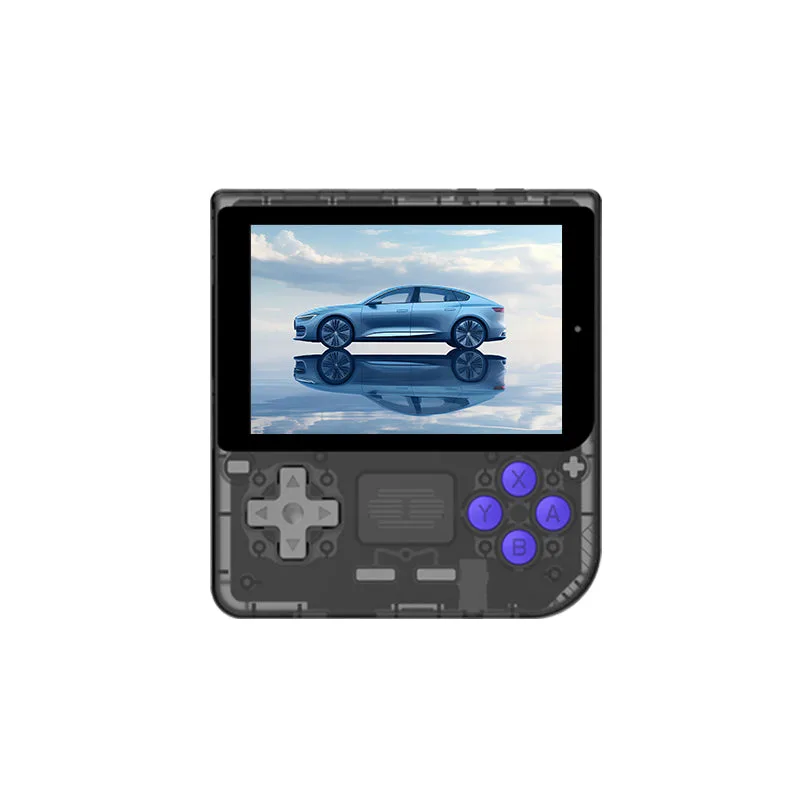
Sold outPowkiddy V10
3.5 in IPS OCA full lamination · 3000 mAh · Various open source Linux
UK price not checked
Frequently asked questions
- What does "not stated by the maker" mean on a spec row?
- It means the maker's own product page does not give that value. PlayGearHQ does not fill gaps from memory, retailers, forums or videos, and has not handled any device, so the row stays blank. The blank is useful information: the one party that should know the figure has not published it. For example, the Miyoo A30 page states no weight, dimensions or Bluetooth support, and the Retroid Pocket 6 page states a size but no weight. If a missing value matters to you, ask the maker before buying rather than assuming a number.
- Why do some devices show no chip name?
- Some makers list cores and a GPU but never name the chip, or name it without explaining it. The Powkiddy V10 names cores but no chip, the Analogue Pocket lists two FPGAs without giving a model, and the Retroid Pocket Classic lists "G1 Gen2" without saying what that is. In each case the page repeats the label exactly as the maker wrote it and adds nothing. That is why the catalogue keeps separate chip, CPU and GPU rows: a maker can fill one and leave another empty, and the rows show which.
- How big a microSD card can a retro handheld use?
- Only as big as the maker states. Anbernic lists up to 2TB for the RG405M and up to 512GB per card for the RG35XX SP, which has dual slots. The SD Association says a host device can only use card types up to its own standard, with SDXC covering cards over 32GB up to 2TB, so it advises checking the device's own requirements before buying. Where a maker gives no maximum at all, as with several Retroid models, treat the limit as unknown rather than unlimited.
- Does the systems row list everything a device can play?
- No. The row lists only the systems the maker names, such as NES, SNES and GBA for the Miyoo Mini Plus, or Game Boy, Game Boy Color and Game Boy Advance for the Analogue Pocket. Anbernic often writes only "30+ emulators" without naming any, and Retroid does not say what runs well. An empty systems row therefore means the maker has not named systems, not that none work. Treat chip, RAM and screen shape as supporting clues, never as proof that a particular system runs.
Sources
- SD Association: capacity classes (SD, SDHC, SDXC, SDUC)
- SD Association: choosing a card capacity and host compatibility
- Wi-Fi Alliance: Wi-Fi 6
- Wi-Fi Alliance: Wi-Fi 7
- Bluetooth SIG: technology overview
- Anbernic RG556 (maker product page)
- Analogue Pocket (maker product page)
- Anbernic RG35XX H (maker product page)
More from Guides
Guides
Retro handheld chips explained: H700, Snapdragon and more
Decodes the chip names makers list on retro handhelds, explains our entry, mid, high and flagship tiers, and says what those tiers cannot tell you.
8 min read
Guides
microSD cards for retro handhelds: sizes, classes and slots
What the card does in a retro handheld, what makers state about slots and maximum sizes, and what the SD Association capacity and speed labels mean.
7 min read
Guides
IPS vs OLED vs LCD retro handheld screens: stated labels and figures
Compares the IPS, OLED and LCD labels across 34 retro handhelds, with stated sizes and resolutions and pixel density worked out from the maker's figures. It does not explain how the panel types work.
7 min read