Android vs Linux retro handhelds: what the OS changes
What the operating system changes for a retro handheld owner: updates, software, storage and controls, using only maker statements and named catalogue devices.
By Sepehr Sabbagh-pourPublished 14 Oct 2026Updated 9 Nov 20267 min read

On a retro handheld, Android and Linux differ most in updates, touch screens and how storage is arranged. In our catalogue 14 devices list Android and 16 list Linux as their system family; the RG DS lists both, the Analogue Pocket lists PocketOS and two more state none. This guide makes no performance claims.
Which catalogue devices are Android and which are Linux?
These are the operating systems the makers state, grouped by operating system family.
| Family | Devices and stated system |
|---|---|
| Android | Anbernic RG405M (Android 12), RG556 (Android 13), RG353V (Android 11 + Linux), Retroid Pocket 4 Pro (Android 13), Pocket 5 (Android 13), Pocket 6 (Android 13), Pocket Flip 2 (Android 13), Pocket Classic (Android 14), AYN Thor (Android 13), AYN Odin 3 (Android 15), AYN Odin 2 Portal (Android 13), Ayaneo Pocket S (Android 13), Ayaneo Pocket DS (Android, version not stated), Mangmi Air X (Android 14) |
| Linux | RG28XX, RG34XX, RG34XXSP, RG35XX H, RG35XX Plus, RG35XX SP, RG40XX H, RG40XX V and RG CubeXX (all "Linux 64-bit"); Miyoo A30 ("Linux-based system"); Miyoo Mini Plus ("Linux"); Trimui Brick ("Linux"), Smart Pro S ("Linux") and Smart Pro ("Open Source Linux"); Powkiddy RGB30 and V10 ("various open source Linux") |
| Both listed | Anbernic RG DS: "Android 14/Linux 64-bit"; the maker does not explain how the two relate |
| Neither | Analogue Pocket: FPGA hardware; the maker lists PocketOS. The Miyoo Flip V2 and ModRetro Chromatic entries state no operating system. |
The RG353V is filed under Android because its maker lists "Dual boot: Android 11 and Linux". The same maker page also covers a cheaper RG353VS, which is Linux only; our entry uses the V.
What do the maker pages say, side by side?
| Topic | Android devices | Linux devices |
|---|---|---|
| Update method | OTA stated on Retroid and Anbernic pages (RG405M, RG556) | No update method described, except that the Miyoo Mini Plus page lists Wi-Fi for firmware updates |
| Touch screen | Listed on the RG405M, RG353V, Thor, Odin 3, Odin 2 Portal, Pocket 4 Pro and Air X | None lists one |
| Storage wording | Fixed internal storage plus a card slot | Card as the main storage on the Anbernic and Powkiddy pages (dual slots on most); the Trimui pages list 8GB eMMC plus a card |
| Software wording | "Android games" plus simulators or emulators | "Ported games" and 30+ emulators, worded differently per model |
| Typical screen | 640 x 480 on the RG405M; 1080 x 1920 on the RG556 | 640 x 480 on the RG35XX H and RG28XX; 720 x 720 on the RGB30 |
| Third-party OS | RG405M page: cannot be reversed, voids the warranty | Not stated by the other makers |
The pattern in the wording is that Android pages mention updates and touch screens, while Linux pages mention card storage and button layouts. That is a reading of the wording, not a measured difference.
What changes for updates?
This is where the maker pages say the most, and mostly for Android devices. Retroid states "official OTA support" on the Pocket 5, Pocket 6, Flip 2, 4 Pro and Classic pages; the 4 Pro, 5 and 6 pages add that it covers incremental software upgrades. Anbernic lists "OTA wireless upgrade" for the RG405M and "FOTA wireless updates" for the RG556. Anbernic pairs the abbreviations with the word "wireless" on both pages; Retroid does not expand "OTA".
For the Linux devices, the maker pages describe no update mechanism, apart from the Miyoo Mini Plus page listing Wi-Fi for firmware updates without detail, so we cannot say how they are updated. One Anbernic note is worth knowing: the RG28XX page says overseas-warehouse units were still on the older Linux system rather than the 64-bit update. That is a reason to ask the seller which firmware a unit ships with.
One caution comes from a single page. The RG405M page says that installing a third-party operating system cannot be reversed and voids the warranty. No other page in the catalogue says this, and we take it as that maker's statement, not as advice either way.
What changes for apps and software?
Both families can run RetroArch. Its own platforms page has an Android section with APK downloads and app stores, and a Linux section with Snap, Flatpak and AppImage installs (RetroArch platforms). That says the program exists for both; it does not say it is installed or supported on any particular handheld.
Maker wording is the best guide to the software model. Anbernic's Android pages (RG405M, RG556, RG353V, RG DS) say "Android games" plus "20+ kinds of simulator" or "30+ emulators", wording that points at Android software generally, though the pages list no apps. The Linux pages word it differently, and not identically: the RG35XX H, RG34XX, RG34XXSP, RG35XX SP and RG40XX H say "ported games and other 30+ emulators", the CubeXX and RG40XX V say "ported games and 30+ emulators", the RG28XX says "Support 30+ emulators", and the RG35XX Plus says "30+ kinds of simulator". None of the pages names the systems, so use these phrases as hints about the software model and nothing more.
Because the system lists on the maker pages are vague, the operating system tells you how a device is built and maintained, not what it will play. Two devices make the contrast visible. The Retroid Pocket 5 page lists Android 13 and gives no system list. The RG35XX H page lists Linux 64-bit and "30+ emulators". Neither tells you more about which games work, and neither says how often the software changes after purchase. If long-term support matters to you, ask the maker how updates are delivered before you order, and keep the reply.
What changes for storage?
Android makers tend to state fixed internal storage plus a card slot: UFS 3.1 and a TF (microSD) slot on the Retroid Pocket 5 and 6, UFS 2.2 and a slot up to 2TB on the RG556, and 64GB eMMC with microSD up to 2TB on the Mangmi Air X. Most Linux Anbernic pages describe a TF card included and dual card slots with a maximum of 512GB per card, so the card is the only storage the page describes. The Trimui pages differ: they list 8GB eMMC plus a TF card slot expandable up to 1TB. The Powkiddy RGB30 page spells out a split: "TF1 for the OS, TF2 for games". Our card guide covers sizes and standards.
Every Android device in the catalogue states a card slot, but only some state a maximum size: 512GB on the RG353V, 2TB on the RG405M, RG556 and Mangmi Air X. The AYN Thor and Odin 3 list internal UFS storage and a TF card slot (from the maker's spec image) and state no maximum.
What changes for controls?
Touch is the clearest dividing line between the two groups. Android devices such as the RG405M, RG353V, Thor, Odin 3, Retroid Pocket 4 Pro and Mangmi Air X list touch screens, as does the dual-screen RG DS with its stylus. None of the Linux devices lists a touch screen. Touch is therefore something to look for on the device page, not something the operating system label guarantees.
Sticks vary independently of the OS. Hall-effect sticks are listed on most Retroid models, and the Linux RG28XX lists no analog stick. Check the device page, not the OS, for the control layout.
What should you ask before ordering?
- Which operating system version does the exact unit ship with? The RG28XX page notes that overseas-warehouse units were still on the older Linux system.
- How are updates delivered, and for how long? Only the Retroid and Anbernic Android pages name OTA, and no end date is given.
- Do you need a touch screen? Check the device page, because no Linux device lists one.
- Where will your games live? A single card with a stated maximum is simpler to plan around than an unstated one.
- Will you change the system? Read the maker's warranty wording first; the RG405M page is the only one that addresses it.
A short worked example on storage: the Linux Anbernic pages describe dual card slots with a 512GB maximum per card, so two cards could hold at most 2 x 512GB = 1,024GB between them. The Android RG556 states a single card slot up to 2TB plus internal UFS 2.2, so its card ceiling is higher but is a single card. Neither figure is a recommendation to fill the slots.
How should you choose between them?
- You want over-the-air updates the maker documents: the Retroid and Anbernic Android pages state them.
- You want a touch screen or an app-style interface: filter for Android.
- You want a small, button-driven device with a card as its main storage: the Linux Anbernic and Miyoo pages fit that description.
- You are unsure: use how to choose a retro handheld, or see the Android shortlist.
The OS also does not follow price or tier neatly: the RG353V and RG DS list Android yet sit in our entry tier (see retro handheld chips explained). For the wider picture, start with what is a retro handheld.
Devices in this guide
Anbernic
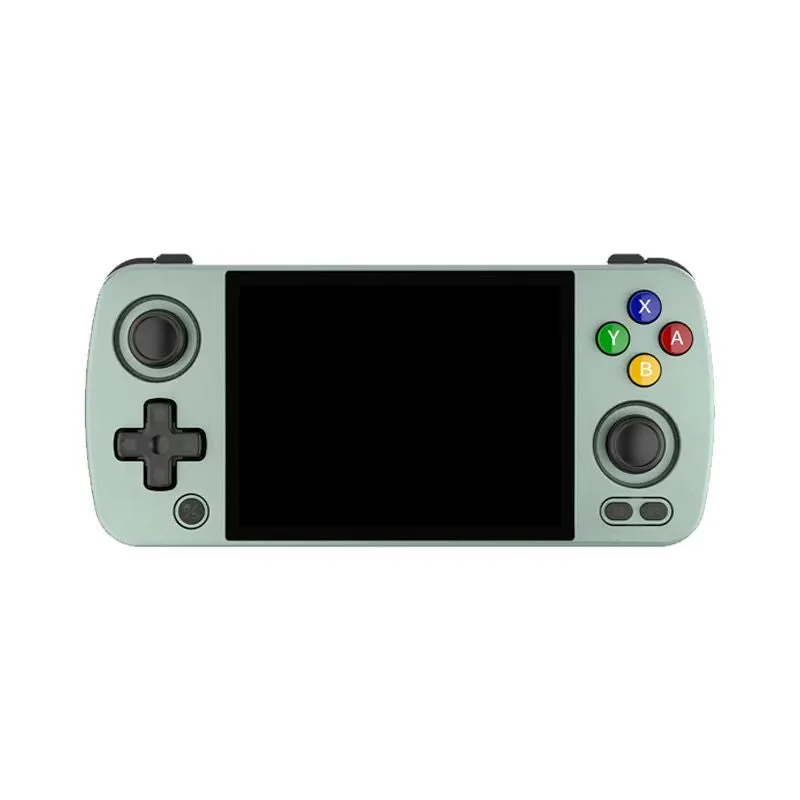
Anbernic RG353V
3.5 in IPS, full viewing angle, zero-distance OCA full fit, multi-touch · 3200 mAh · Android 11 + Linux (64-bit)
UK price not checked
Anbernic
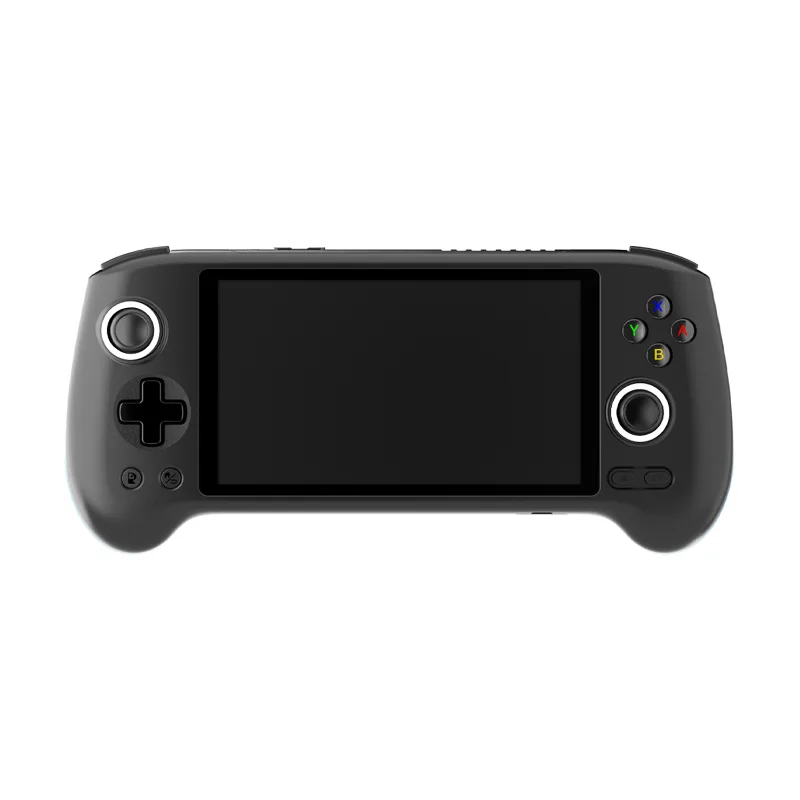
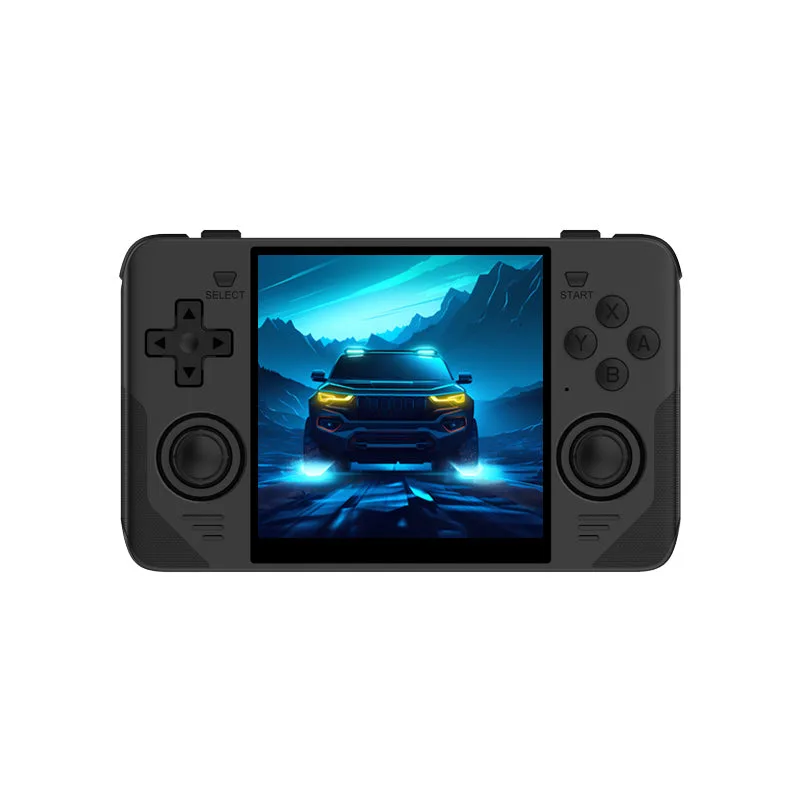
Anbernic RG35XX H
3.5 in IPS, OCA full lamination · 3300 mAh · Linux 64-bit
UK price not checked
Powkiddy
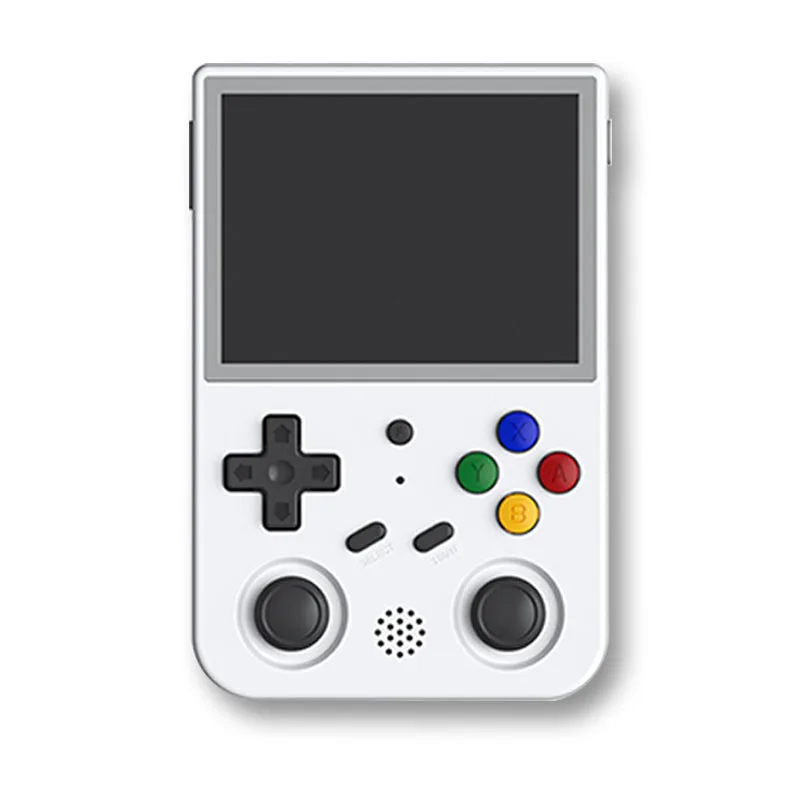
Sold outPowkiddy RGB30
4 in OCA full fit, 1:1 LCD · 4100 mAh · Various open source Linux
UK price not checked
Anbernic
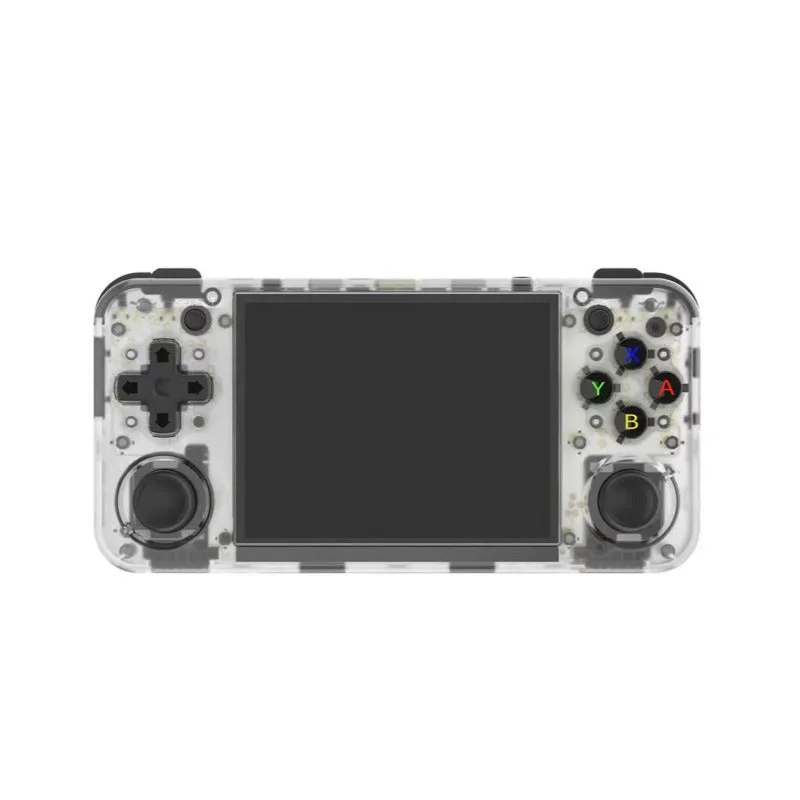
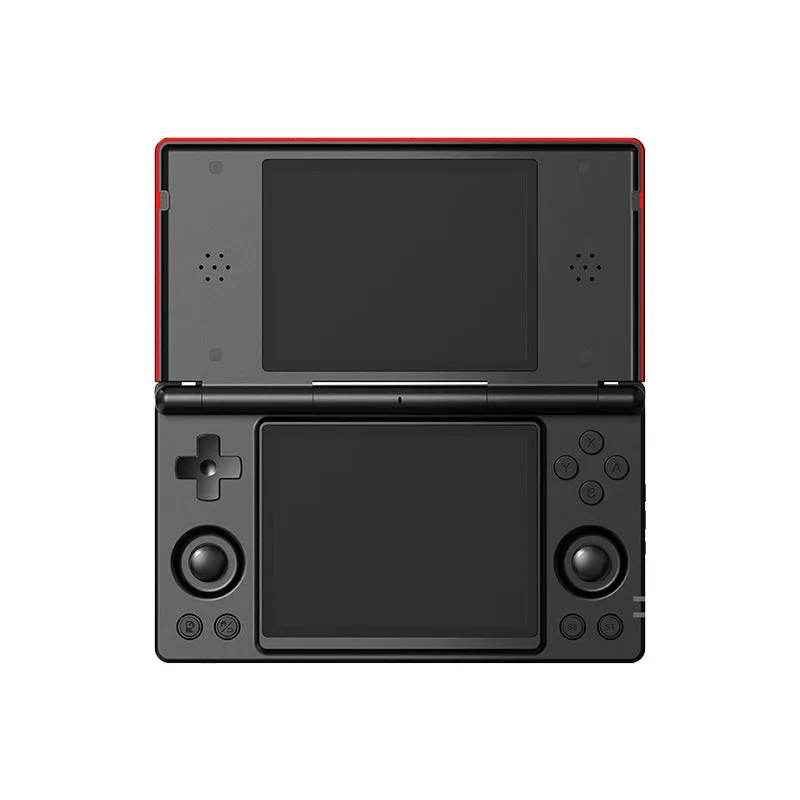
Anbernic RG DS
4 in IPS, OCA full lamination, multi-touch, supports capacitive stylus (two screens) · 4000 mAh · Android 14/Linux 64-bit
UK price not checked
Frequently asked questions
- Is Android or Linux better for a retro handheld?
- Neither is better on the evidence we can source. Maker pages describe different software, storage and update arrangements, not performance, and no page we cite measures either system. Android devices in the catalogue list touch screens and, on Retroid and Anbernic pages, over-the-air updates. The Linux devices are button-driven and use a card as main storage. Pick by what the maker states about updates, touch, storage and the games you want to play.
- Which retro handhelds run Linux?
- In our catalogue the Anbernic RG28XX, RG34XX, RG34XXSP, RG35XX H, Plus and SP, RG40XX H and V, and RG CubeXX list Linux 64-bit. The Miyoo A30 lists a Linux-based system, the Miyoo Mini Plus and Trimui Brick and Smart Pro S list Linux, the Trimui Smart Pro lists open source Linux, and the Powkiddy RGB30 and V10 list various open source Linux. The Anbernic RG DS lists both Android 14 and Linux 64-bit, and its maker does not explain how the two relate.
- Do Android retro handhelds get updates?
- Several makers say so. Retroid states official OTA support on the Pocket 5, Pocket 6, Flip 2, 4 Pro and Classic pages, and the 4 Pro, 5 and 6 pages add incremental software upgrades. Anbernic lists OTA wireless upgrade for the RG405M and FOTA wireless updates for the RG556. No end date for updates is given, so check the maker page for the current position before you order.
- Can I install a different operating system on my handheld?
- Anbernic says on the RG405M page that installing a third-party operating system cannot be reversed and voids the warranty. No other page in the catalogue says this either way, which is not the same as saying it is safe. If you plan to change the system, ask the maker or seller about warranty wording first, and keep the reply. We do not give instructions for changing the system on any device.
Sources
More from Guides
Guides
Retro handheld chips explained: H700, Snapdragon and more
Decodes the chip names makers list on retro handhelds, explains our entry, mid, high and flagship tiers, and says what those tiers cannot tell you.
8 min read
Guides
microSD cards for retro handhelds: sizes, classes and slots
What the card does in a retro handheld, what makers state about slots and maximum sizes, and what the SD Association capacity and speed labels mean.
7 min read
Guides
IPS vs OLED vs LCD retro handheld screens: stated labels and figures
Compares the IPS, OLED and LCD labels across 34 retro handhelds, with stated sizes and resolutions and pixel density worked out from the maker's figures. It does not explain how the panel types work.
7 min read