Anbernic
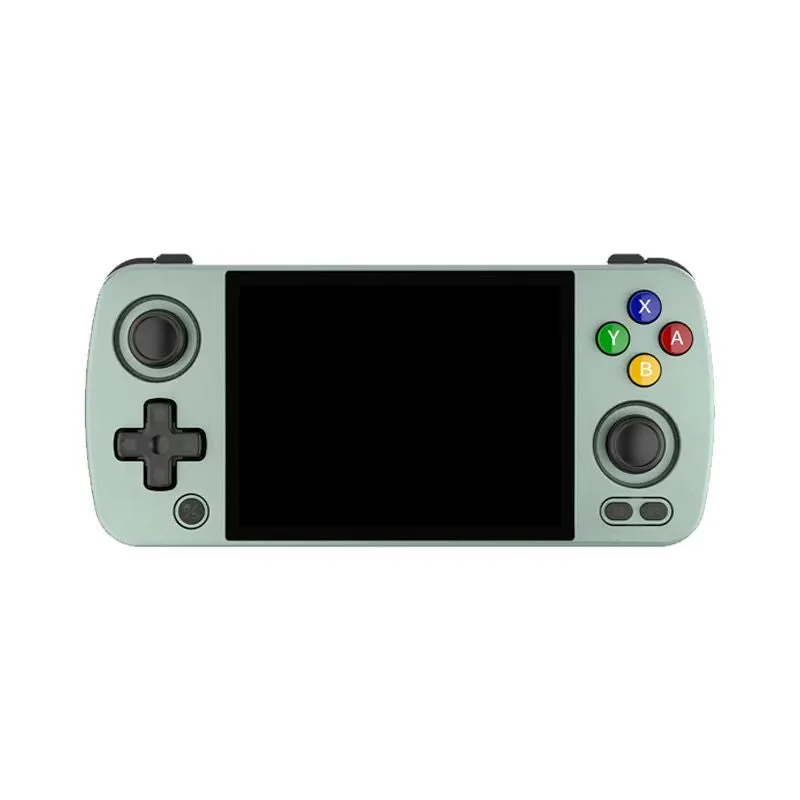
Anbernic RG35XX H
3.5 in IPS, OCA full lamination · 3300 mAh · Linux 64-bit
UK price not checked
Decodes the chip names makers list on retro handhelds, explains our entry, mid, high and flagship tiers, and says what those tiers cannot tell you.
By Sepehr Sabbagh-pourPublished 14 Oct 2026Updated 9 Nov 20268 min read

A retro handheld's chip name says who made the processor and sometimes its generation, but not how any game will run. This guide decodes the names makers use, from the H700 to Snapdragon 8 Gen 2, and explains our four tiers: entry, mid, high and flagship. Every figure is the maker's own.
We rely on maker statements and on the chip designers' own pages. Where a maker uses a label that no chip company page explains, we say so rather than guess.
Makers split the processor into separate lines. The CPU line usually lists processor cores, often written as Arm core names such as Cortex-A53 with a clock speed. The GPU line names the graphics part, for example Mali-G31 or Adreno 650. A chip name, like "RK3566" or "H700", is the label the maker puts on the whole package. Some pages give only some of these lines, which is why the catalogue has separate rows for them.
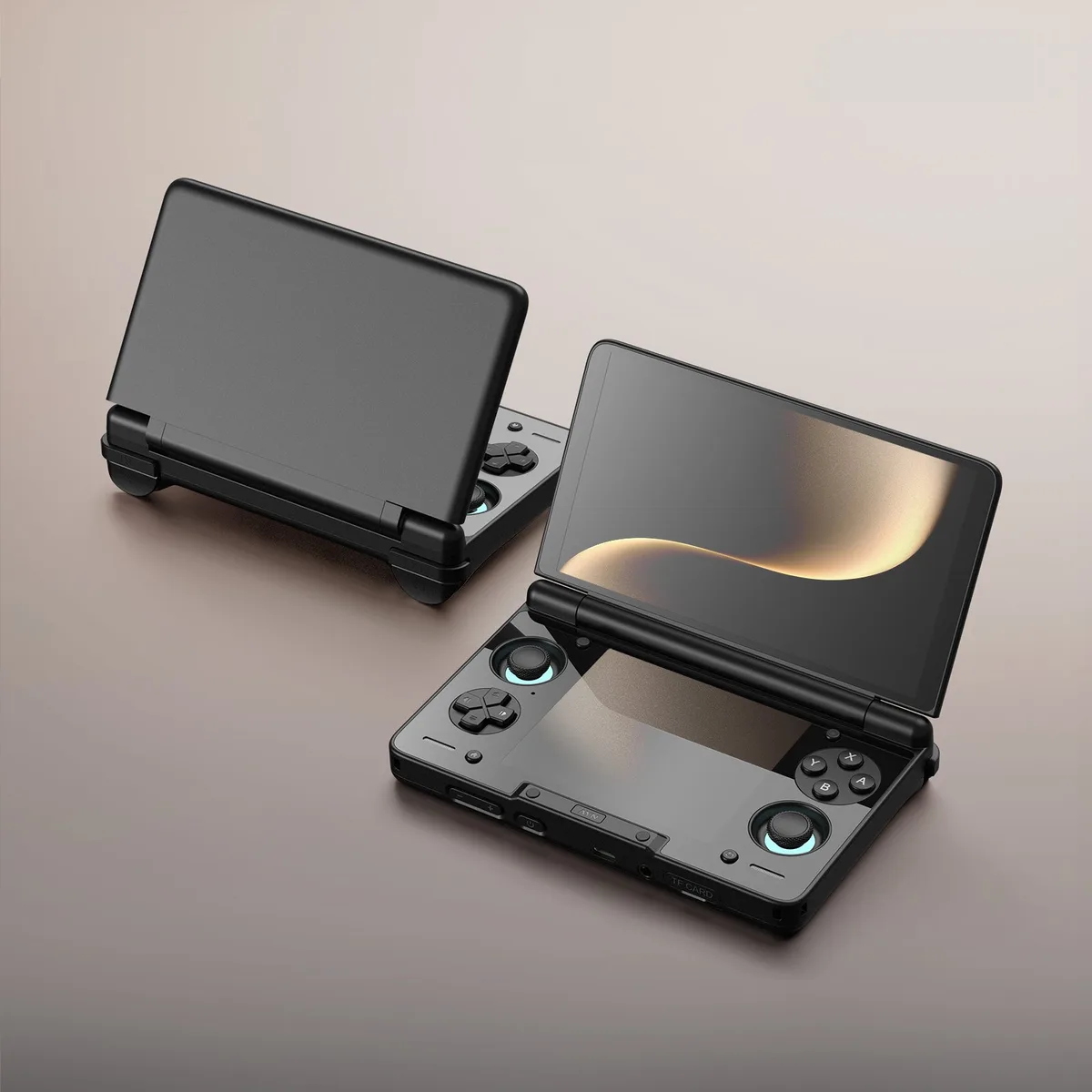
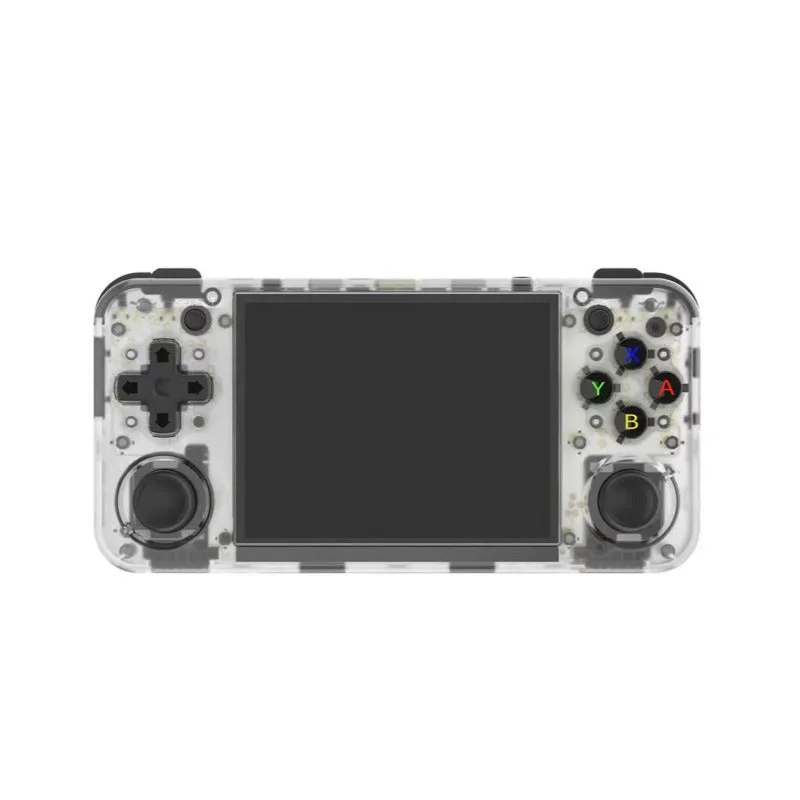
The Anbernic RG35XX H and its siblings list an H700 (nine Anbernic devices in all): quad-core Cortex-A53 at 1.5GHz with a dual-core G31 MP2 graphics unit, as Anbernic writes it. Anbernic's pages give the chip name as "H700" and name no chip company. Arm describes the Cortex-A53 as a low-power, 64-bit processor that comes in one to four cores (Arm Cortex-A53). The figures above are Anbernic's alone. The Miyoo A30 lists an Allwinner A33, quad-core, with 512MB of RAM; the same limit on sources applies.
The Miyoo Mini Plus lists a SigmaStar SSD202D with two Cortex-A7 cores at 1.2GHz. The Powkiddy V10 lists quad-core Cortex-A35 cores at 1.5GHz but gives no chip name, which is why our device page leaves the chip blank.
Rockchip chips sit one step along. The Anbernic RG353V and Powkiddy RGB30 list an RK3566; Rockchip's page for that chip gives quad-core Arm Cortex-A55 (Rockchip RK3566). The Anbernic RG DS lists an RK3568, which Anbernic writes as quad-core Cortex-A55 at up to 2.0GHz. Arm calls the A55 a mid-range processor (Arm Cortex-A55).
The Anbernic RG405M lists a Unisoc Tiger T618 with two A75 and six A55 cores plus a Mali G52. The RG556 lists a Unisoc T820, written as one A76 core at 2.7GHz, three more at 2.3GHz and four A55 cores, with a quad-core Mali-G57. Unisoc is not on our list of approved authority sources, so these descriptions are Anbernic's alone. Arm describes the A76 as a second-generation high-performance core (Arm Cortex-A76).
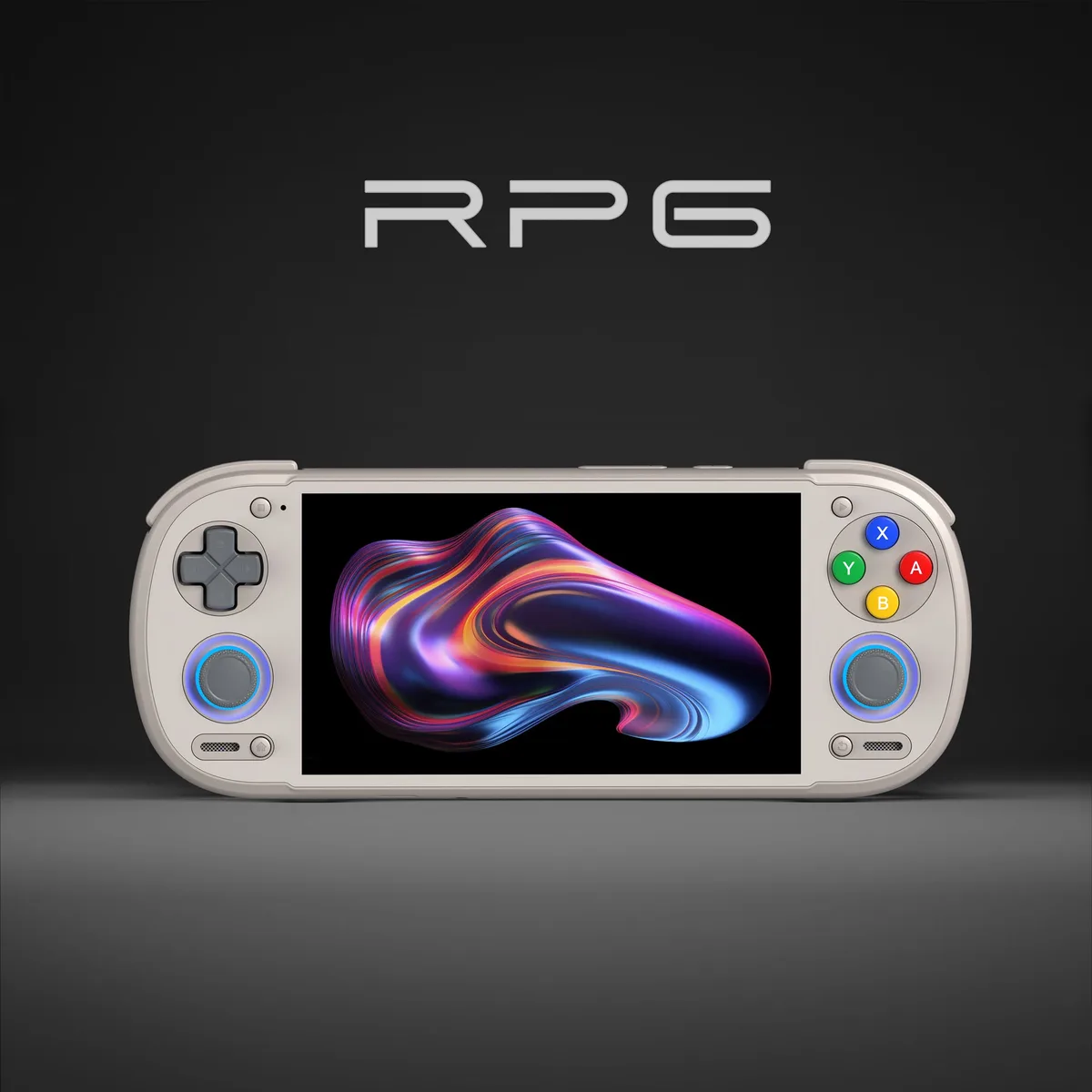
The Retroid Pocket 6 lists a Snapdragon 8 Gen 2 with Adreno 740, and the AYN Thor's spec image lists the same GPU for its Base, Pro and Max versions, with an Adreno 650 for the Lite. Qualcomm has a product page for that platform (Snapdragon 8 Gen 2), but the core and clock figures here are Retroid's own: it writes its cores as "1 GoldPlus@3.2GHz, 4 Gold@2.8GHz, 3 Silver@2.0GHz", which is the maker's own naming.
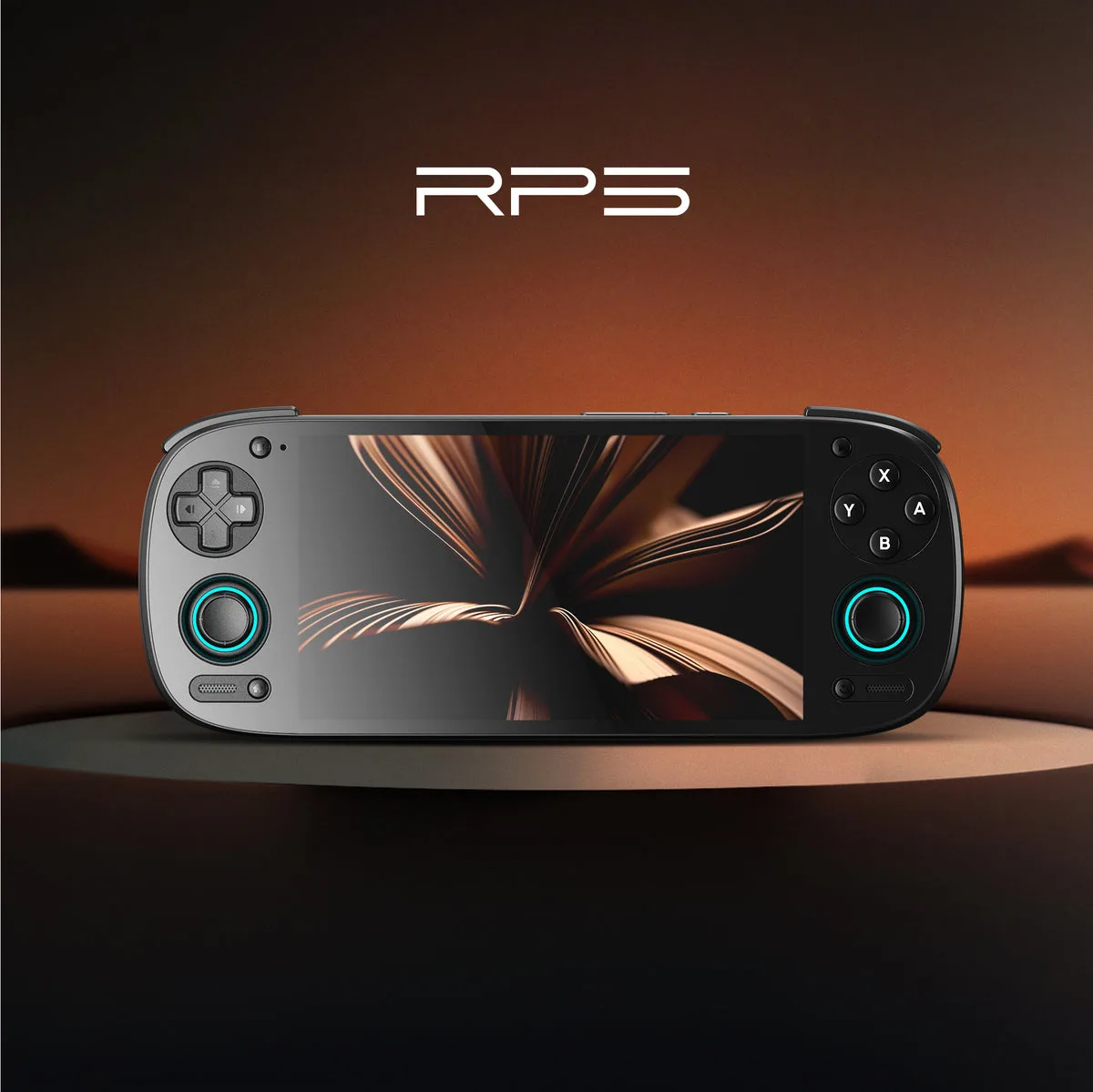
The Retroid Pocket 5 lists a Snapdragon 865 (from the maker's spec image) with cores written as one A77 at 2.8GHz, three at 2.4GHz and four A55 at 1.8GHz and an Adreno 650. Qualcomm lists the Snapdragon 865 as one of its 5G mobile platforms (Snapdragon 865). The Pocket Flip 2 lists identical cores and GPU but writes only "SD865", and the Thor's Lite version also lists "SD865"; we repeat that label as written and do not expand it. Arm describes the A77 as a third-generation high-performance core (Arm Cortex-A77).
Other names need care. The Mangmi Air X lists a Snapdragon 662 (SM6115) with an Adreno 610. The Ayaneo Pocket DS and Pocket S list Snapdragon G3x Gen 2. The AYN Odin 3 lists Qualcomm Dragonwing Q8 with an Adreno 830 GPU. The Retroid Pocket Classic lists "G1 Gen2" with an 8-core Kryo CPU (2 performance and 6 efficiency cores) and an Adreno A12, and Retroid does not say what G1 Gen2 is beyond the name. We do not expand any of these.
The Retroid Pocket 4 Pro lists "MTK D1100" with four A78 cores at 2.6GHz, four A55 cores and a G77 MC9 GPU. MediaTek describes Dimensity as its smartphone chip line, from entry-level to flagship (MediaTek Dimensity), but its page does not mention a D1100, so we keep Retroid's label and do not equate it with any named MediaTek product.
The Analogue Pocket lists two FPGAs and does not name the model. The maker says the device is engineered in FPGAs with no emulation. It lists no Arm cores or GPU, so none of the names above apply to it, and it carries no tier.
Each device gets an entry, mid, high or flagship label based on the CPU and GPU the maker states. The tiers are our own grouping of the makers' stated chips, not an industry standard, and our rubric uses these anchors. Our rubric describes entry as quad-core Cortex-A53 class chips with a basic GPU (for example the H700 with Mali-G31), mid as Cortex-A55 or A76 class chips with a mid-range GPU, high as Cortex-A77 or newer cores with a high-end mobile GPU (for example one A77 at 2.8GHz with an Adreno 650), and flagship as current top mobile or handheld PC silicon. The catalogue places the RK3566 and RK3568 devices, which list Cortex-A55 cores, in entry, so treat a core name as a guide rather than a rule. If the maker states neither CPU nor GPU, or the device is FPGA based, no tier is set. Counts: 6 flagship, 2 high, 4 mid, 19 entry and 3 with no tier.
| Tier | Devices in the catalogue |
|---|---|
| Flagship (6) | Retroid Pocket 6, AYN Thor (the 8 Gen 2 versions), AYN Odin 3, AYN Odin 2 Portal, Ayaneo Pocket DS, Ayaneo Pocket S |
| High (2) | Retroid Pocket 5, Pocket Flip 2 |
| Mid (4) | Retroid Pocket 4 Pro, RG405M, RG556, Mangmi Air X |
| Entry (19) | The nine Anbernic H700 devices, Anbernic RG353V and RG DS, Miyoo A30, Mini Plus and Flip V2, Powkiddy RGB30 and V10, Trimui Brick, Smart Pro and Smart Pro S |
| No tier (3) | Retroid Pocket Classic, Analogue Pocket, ModRetro Chromatic |
The tier label is built from the CPU and GPU only, but the same spec sheets also state memory, and the two tend to rise together. These are the figures the makers list for a few devices from each tier.
| Device | Stated chip and cores | Stated RAM | Tier |
|---|---|---|---|
| RG35XX H | H700, quad-core Cortex-A53 at 1.5GHz | 1GB | Entry |
| RG353V | RK3566, quad-core Cortex-A55 | 2GB LPDDR4 | Entry |
| RG405M | Unisoc T618, 2 x A75 and 6 x A55 | 4GB LPDDR4X | Mid |
| Retroid Pocket 4 Pro | MTK D1100, 4 x A78 and 4 x A55 | 8GB LPDDR4x | Mid |
| RG556 | Unisoc T820, 4 x A76 and 4 x A55 | 8GB LPDDR4X | Mid |
| Retroid Pocket 5 | Snapdragon 865, 4 x A77 and 4 x A55 | 8GB (spec image) or 12GB (page text) | High |
| Retroid Pocket 6 | Snapdragon 8 Gen 2, Adreno 740 | LPDDR5x, 8GB or 12GB | Flagship |
Read it as a rough ladder: 1GB, 2GB, 4GB, then 8GB and above as the tiers rise. It is a pattern in stated figures, not a rule, since the Pocket 4 Pro and RG556 share 8GB yet sit in the same mid tier as the 4GB RG405M. Two things to note. The Pocket 5's own pages disagree between 8GB and 12GB, so confirm the variant before ordering. And the table says nothing about screen, battery or price, which differ device by device.
Reasoning only from what the makers state, a few matches follow.
None of these is a promise about any game. The tiers narrow a shortlist; the device page's stated figures finish the job.
For shopping, use the tier as a starting filter, then read the stated figures. How to read retro handheld specs covers RAM and screens, Android vs Linux retro handhelds covers the software side, and what is a retro handheld is the starting point if the category is new to you.
Anbernic
3.5 in IPS, OCA full lamination · 3300 mAh · Linux 64-bit
UK price not checked
AYN
Pre-order6 in Customized Full HD AMOLED touch screen (main); 3.92" AMOLED touch display (bottom) · 6000 mAh · Android 13
UK price not checked
Guides
No price list, just a checklist for judging a retro handheld deal in the UK: the maker's price, import VAT, returns, warranty, stock and charger.
8 min read
Guides
What the card does in a retro handheld, what makers state about slots and maximum sizes, and what the SD Association capacity and speed labels mean.
7 min read
Guides
Compares the IPS, OLED and LCD labels across 34 retro handhelds, with stated sizes and resolutions and pixel density worked out from the maker's figures. It does not explain how the panel types work.
7 min read