Valve
Valve Steam Deck OLED
7.4 in HDR OLED, 1280 x 800, up to 90Hz · SteamOS 3 (Arch-based)
UK price not checked
Six PC handhelds compared on the makers' own figures: chip, screen, battery, weight and operating system, with what to check before you buy.
By Sepehr Sabbagh-pourPublished 16 Oct 2026Updated 9 Nov 202610 min read

For a UK reader who wants SteamOS, the Steam Deck OLED is the one to start with; for Windows 11, the ROG Ally X, Xbox Ally X, Xbox Ally, MSI Claw 8 EX AI+ and Lenovo Legion Go Gen 2 are covered. Figures are the makers' own, recorded October 2026. We have not tested any of them.
Not sure what the term means? Start with what a handheld gaming PC is; the method is on the how we research page.
| Device | Chip (maker's name) | Screen | RAM | Battery | Weight | OS listed | Best suited to |
|---|---|---|---|---|---|---|---|
| Valve Steam Deck OLED | 6 nm AMD APU, 4 cores | 7.4 inch HDR OLED, 1280 x 800, up to 90Hz | 16 GB | 50Wh | 640 g | SteamOS 3 | SteamOS and the lightest body |
| ASUS ROG Ally X | Ryzen Z1 Extreme, 8 cores | 7 inch IPS-level, 1920 x 1080, 120Hz | 24 GB | 80Wh | 678 g | Windows 11 Home | 1080p at 120Hz with a large battery |
| ASUS ROG Xbox Ally X | Ryzen AI Z2 Extreme, 8 cores | 7 inch IPS-level, 1920 x 1080, 120Hz | 24 GB | 80Wh | 715 g | Windows 11 Home | A newer Ryzen AI chip with an NPU |
| ASUS ROG Xbox Ally | Ryzen Z2 A, 4 cores | 7 inch IPS-level, 1920 x 1080, 120Hz | 16 GB | 60Wh | 670 g | Windows 11 Home | The same screen with a lighter spec |
| Lenovo Legion Go Gen 2 | Ryzen Z2 Extreme, up to 8 cores | 8.8 inch OLED, 144Hz VRR | Not stated | 74Wh | From 920 g with controllers | Windows 11 (SteamOS also described) | The biggest OLED and detachable controllers |
| MSI Claw 8 EX AI+ CG3EM | Intel Arc G3 Extreme, 14 cores | 8 inch IPS-level, 1920 x 1200, 48~120Hz VRR | 32 GB | 80Wh | 785 g | Windows 11 Home | Wi-Fi 7, Bluetooth v6 and 32 GB |
Prices are deliberately not in the table. Only three of the six devices show an amount, and they are not like for like; they are covered pick by pick below. UK prices are not checked beyond what each maker's own page shows.
Six models are covered here, each with a maker page recorded in full for this site. The catalogue also holds the original Lenovo Legion Go and the Valve Steam Deck LCD, which this list leaves out to stay at six. Treat it as a shortlist from the stated figures, not a ranking of the whole market. We give no scores. The "best for" labels below reason from the numbers the makers publish, such as screen size, battery capacity in watt-hours and weight, and nothing about how a game runs.
The Steam Deck OLED is the only device here whose maker lists SteamOS 3 as its operating system, which Valve describes as Arch-based with a KDE Plasma desktop. It lists a 7.4 inch HDR OLED at 1280 x 800, up to 90Hz, with 1,000 nits peak in HDR and 600 nits in SDR, plus 16 GB of LPDDR5 RAM and a 50Wh battery. Valve states 3 to 12 hours of gameplay, depending on content.
At 640 g it is the lightest of the six. The trade-off is on paper too: the screen is below 1080p, Wi-Fi is 6E rather than Wi-Fi 7, and the chip is a 4-core, 8-thread Zen 2 APU with 8 RDNA 2 compute units and a 4 to 15W power range. Valve's UK pages show pounds: the 512GB OLED is listed at £779 (checked Oct 2026). The same page says the OLED starts at £649, but that figure sits beside the 256GB LCD model in its comparison table. Every model has a microSD slot.
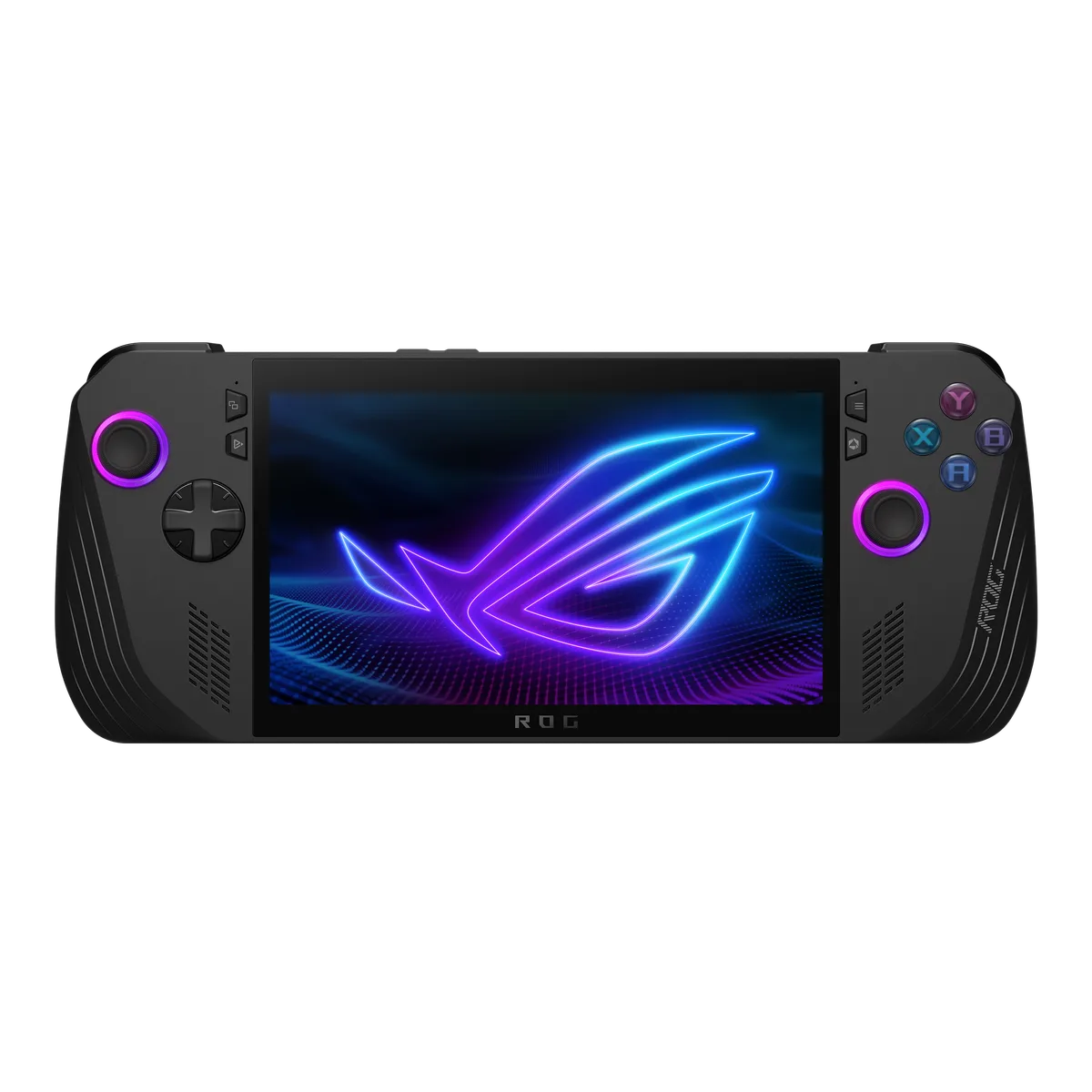
ASUS lists the ROG Ally X with a Ryzen Z1 Extreme (Zen 4, 8 cores, 16 threads, boost up to 5.10 GHz), 24GB of LPDDR5, a 1TB PCIe 4.0 SSD and an 80Wh four-cell battery. The 7 inch panel is 1920 x 1080, IPS-level, at 120Hz and 500 nits. It runs Windows 11 Home, and ASUS gives a 9 to 30W TDP range.
Ports are a USB 3.2 Gen 2 Type-C and a USB 4 Type-C that ASUS says is Thunderbolt 4 compliant, plus a UHS-II microSD reader. It weighs 678 g. ASUS notes that the Bluetooth 5.4 version may change with the OS version. The spec page shows an estore price label but no amount, so we cannot quote a price.
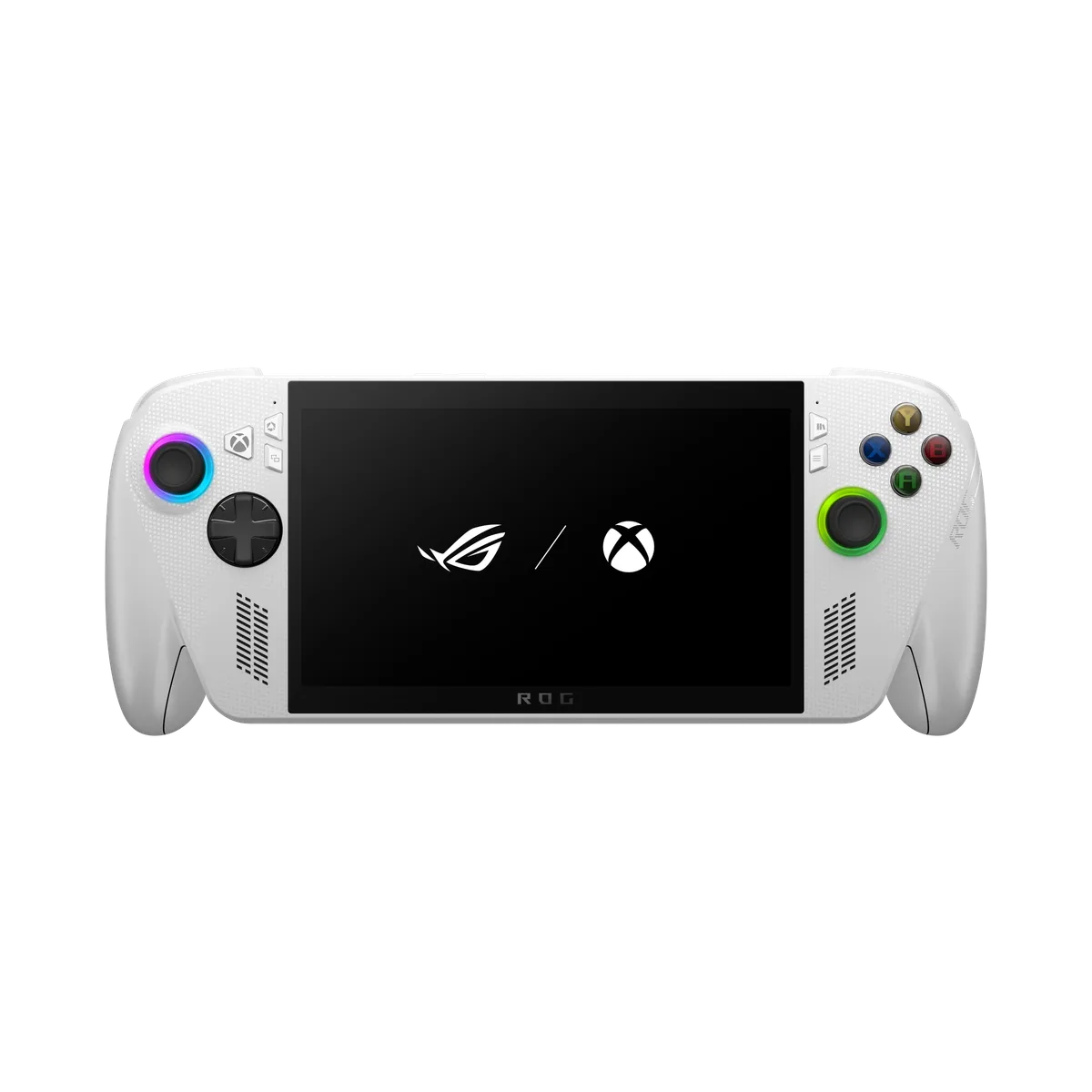
The ROG Xbox Ally X has the same 7 inch 1080p 120Hz panel and 80Wh battery as the Ally X, but ASUS lists a Ryzen AI Z2 Extreme (8 cores, 16 threads, boost up to 5.0GHz) with an AMD XDNA NPU rated up to 50TOPS, 24GB of LPDDR5X and a 1TB SSD. It also lists a Microsoft Pluton security processor and a fingerprint sensor.
ASUS lists a security update support period of five years, until 31 December 2030, for this model too. It is the heaviest ASUS model here at 715 g. ASUS lists Wi-Fi 6E and Bluetooth 5.4, so the wireless standards match the Ally X. As with its siblings, no price amount is shown on the maker's page. The bundled Game Pass Premium offer is two months, subject to terms and eligible markets.
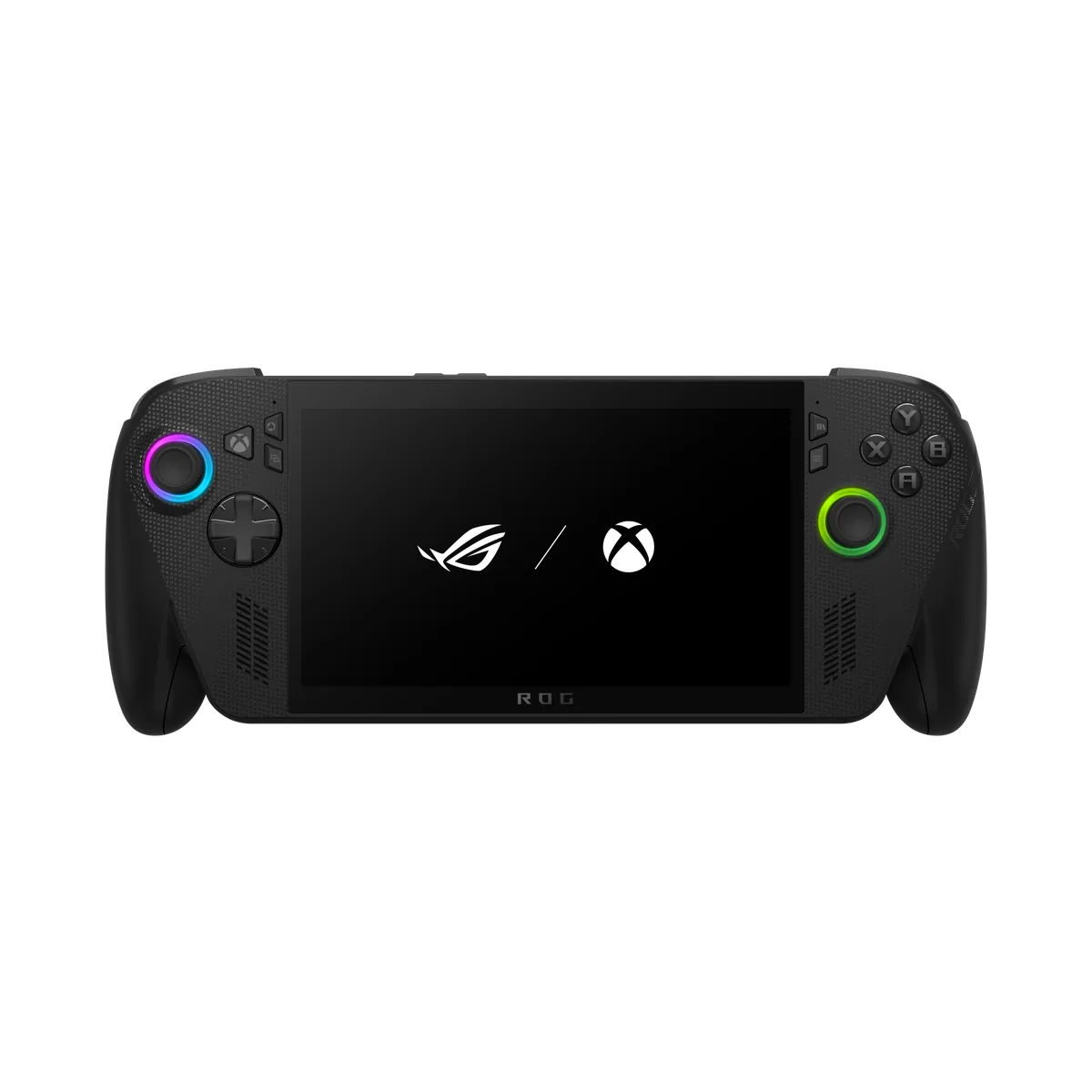
The standard ROG Xbox Ally keeps the 7 inch 1080p 120Hz panel but steps down to a Ryzen Z2 A with 4 cores, 8 threads, 6MB of cache and boost up to 3.8GHz, 16GB of LPDDR5 and a 512GB SSD. The battery is 60Wh and the weight is 670 g. ASUS names the graphics only as AMD Radeon Graphics, so there is no compute-unit count to compare.
ASUS lists a security update support period of five years, until 31 December 2030, for this model. Its page also notes that using Game Pass on this PC requires leaving Windows S mode. No price amount is shown.
Lenovo lists an 8.8 inch PureSight OLED at 16:10 and 144Hz VRR with 500 nits and VESA True Black 1000 certification, the largest and fastest panel in this group. The Legion Go Gen 2 uses a Ryzen Z2 Extreme (Zen 5, up to 8 cores and 16 threads) with Radeon 890M graphics and a 74Wh battery. The TrueStrike controllers detach, and the weight starts at 920 g with them attached (710 g base, 210 g controllers).
Lenovo's page does not give RAM or SSD capacities, only LPDDR5X and a PCIe SSD, with microSD expansion up to 2TB. Its UK page describes both Windows 11 and SteamOS and does not say which a given configuration ships with. Structured data on the page shows £1,500 (checked Oct 2026), but the visible page does not say which configuration that covers, so treat it as indicative only.
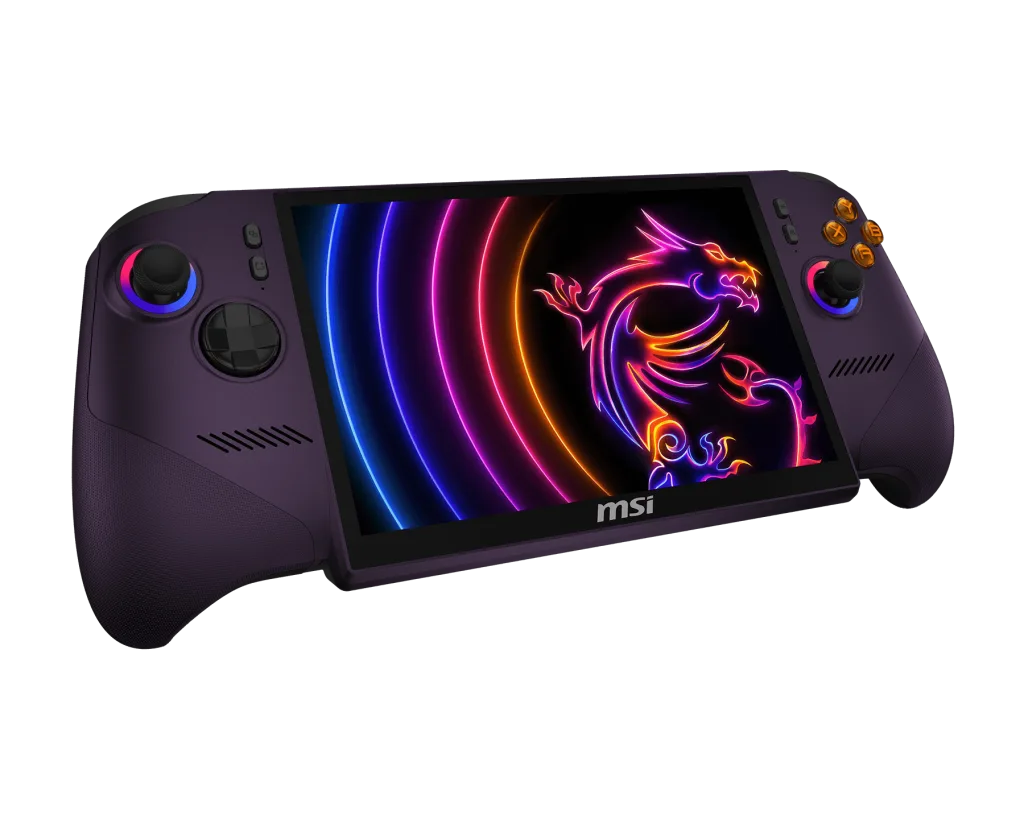
MSI lists an 8 inch 1920 x 1200 IPS-level touchscreen with a 48 to 120Hz VRR range and 500 nits (typical), an Intel Arc G3 Extreme with 14 cores (2 P-cores, 8 E-cores and 4 Low Power E-cores) and Arc GPU B390 graphics, 32GB of LPDDR5x, a 1TB Gen4 SSD and an 80Wh battery. It is the only device here that lists Wi-Fi 7 and Bluetooth v6, and it has two Thunderbolt 4 ports and a microSD Express reader. The MSI Claw 8 EX AI+ weighs 785 g.
The page is MSI's UK store listing for the Launch Pack bundle, which adds a travel case, grip caps and a screen protector. It shows £1,449 including VAT (checked Oct 2026), but the page marks the product as Unavailable, so it may not be on sale when you read this.
The table below uses only the makers' stated figures, plus one division of our own: watt-hours per gram, which is battery capacity divided by stated weight. It is arithmetic, not a measured result, and the Legion weight includes its attached controllers.
| Device | Battery | Weight | Wh per gram (our arithmetic) | Screen pixels (stated resolution) |
|---|---|---|---|---|
| Valve Steam Deck OLED | 50Wh | 640 g | about 0.078 | 1,024,000 (1280 x 800) |
| ASUS ROG Ally X | 80Wh | 678 g | about 0.118 | 2,073,600 (1920 x 1080) |
| ASUS ROG Xbox Ally X | 80Wh | 715 g | about 0.112 | 2,073,600 (1920 x 1080) |
| ASUS ROG Xbox Ally | 60Wh | 670 g | about 0.090 | 2,073,600 (1920 x 1080) |
| Lenovo Legion Go Gen 2 | 74Wh | From 920 g | about 0.080 | Not stated (page says 1200p gaming) |
| MSI Claw 8 EX AI+ CG3EM | 80Wh | 785 g | about 0.102 | 2,304,000 (1920 x 1200) |
Read it as a pointer, not a verdict. The Ally X stores the most energy for its stated weight, and the Steam Deck OLED the least, yet Valve is the only maker here that gives a runtime range. A bigger battery also feeds a bigger screen and a hotter chip on several of these models, so capacity alone does not predict hours.
Start with the operating system, because it narrows the six quickly. If you want SteamOS, the Steam Deck OLED is the one with Valve's own SteamOS 3 listing. If you want Windows, decide on screen first: 7 inch 1080p at 120Hz (the three ASUS models), 8 inch 1920 x 1200 (MSI) or 8.8 inch OLED at 144Hz (Lenovo). Then decide on the battery: 80Wh on the Ally X, Xbox Ally X and Claw, 74Wh on the Legion Go Gen 2, 60Wh on the Xbox Ally and 50Wh on the Deck.
If you are weighing two directly, the Steam Deck OLED vs ROG Ally X comparison puts their figures side by side. For other categories, browse the PC handheld articles, the PC handheld device pages or all our guides.
Valve
7.4 in HDR OLED, 1280 x 800, up to 90Hz · SteamOS 3 (Arch-based)
UK price not checked
ASUS
7 in 7-inch FHD (1920 x 1080) IPS-level touchscreen, 120Hz · Windows 11 Home
UK price not checked
ASUS
7 in 7-inch FHD (1920 x 1080) IPS-level touchscreen, 120Hz · Windows 11 Home
UK price not checked
ASUS
7 in 7-inch FHD (1920 x 1080) IPS-level touchscreen, 120Hz · Windows 11 Home
UK price not checked
MSI
Sold out8 in 8" FHD+ (1920 x 1200) IPS-level touchscreen, 120Hz, VRR · Windows 11 Home
UK price not checked
Lenovo
8.8 in 8.8-inch Lenovo PureSight OLED Gaming display, 16:10, 144Hz VRR · Windows 11 (the page also describes SteamOS)
UK price not checked
PC Handhelds
The Steam Deck OLED lists SteamOS, a 7.4 inch OLED and 640 g; the ROG Ally X lists Windows 11, a 7 inch 1080p 120Hz panel and an 80Wh battery.
7 min read
PC Handhelds
The chips in six handheld PCs, as the makers state them: cores, threads, boost speed, graphics and power range, with no performance claims.
7 min read
PC Handhelds
Valve lists SteamOS 3 on the Steam Deck OLED; ASUS and MSI list Windows 11 Home; Lenovo describes both. Here is what each maker says.
8 min read