Anbernic
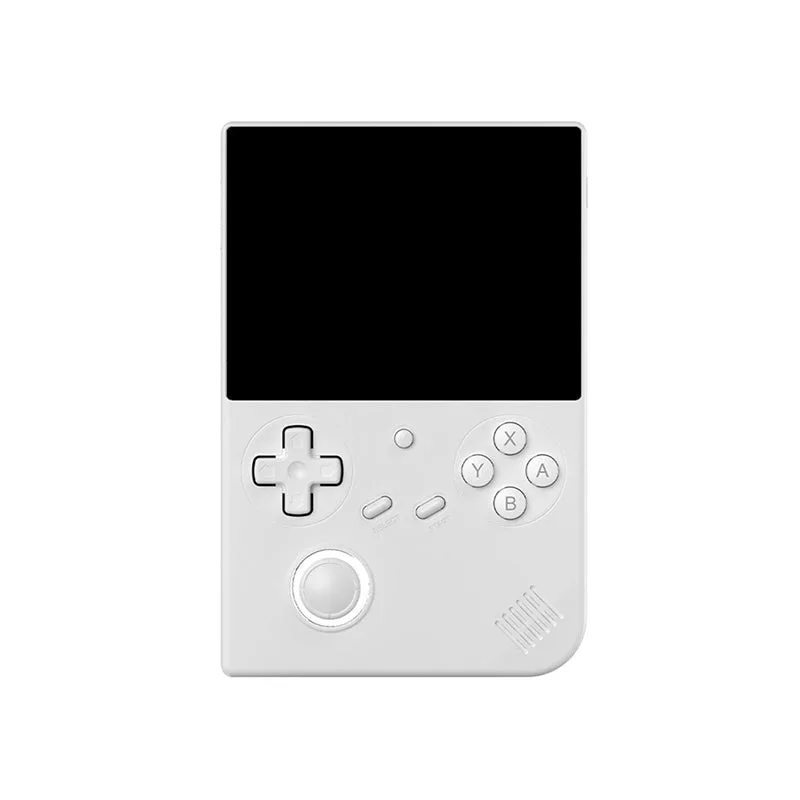
Sold outAnbernic RG35XX Plus
3.5 in IPS, OCA full lamination · 3300 mAh · Linux 64-bit
UK price not checked
Three upright, Game Boy style retro handhelds compared from maker-stated size, screen and battery, plus the devices we left out for lack of proof.
By Sepehr Sabbagh-pourPublished 14 Oct 2026Updated 9 Nov 202610 min read

Three handhelds in the catalogue can be shown to use the upright, Game Boy style layout: the Anbernic RG35XX Plus, the Anbernic RG40XX V and the Miyoo Mini Plus. The RG35XX Plus is the compact pick, the RG40XX V has the largest screen, and the Miyoo Mini Plus is the one whose maker names NES, SNES and GBA.
The list is short on purpose. A device is included only when the maker's page or the maker's own product image establishes a portrait shape. This is a research-based guide: we have not handled any of these devices, and every figure is attributed to the maker (see how we research).
A vertical handheld is one where the tall side is the long side of the body when you play: the screen sits above the controls instead of between two sets of them. Width then decides how the device sits in your hand and pocket, and thickness decides how it sits in a bag.
The proof we asked for is simple. Either the maker's text uses the word, or the maker's own product image shows the screen above a d-pad and face buttons. Stated length and width alone do not settle it, since every handheld lists a longer and a shorter side. Where a maker is silent on both, the device is listed under "Devices we left out" rather than guessed at.
| Row | Anbernic RG35XX Plus | Anbernic RG40XX V | Miyoo Mini Plus |
|---|---|---|---|
| Screen (maker) | 3.5 inch IPS, 640 x 480 | 4 inch IPS, 640 x 480 | 3.5 inch IPS, 640 x 480 |
| Chip (maker) | H700, four Cortex-A53 cores at 1.5 GHz | H700, four Cortex-A53 cores at 1.5 GHz | SigmaStar SSD202D, two Cortex-A7 cores at 1.2 GHz |
| RAM | 1 GB | 1 GB | Not stated |
| Size (maker) | 11.7 x 8.1 x 2.2 cm | 13.9 x 9.2 x 2.2 cm | Not stated |
| Weight (maker) | 186 g | 216 g | Not stated |
| Battery (maker) | 3300 mAh, 8 hours | 3200 mAh, 6 hours | 3000 mAh, hours not stated |
| Wireless | 802.11ac Wi-Fi, Bluetooth 4.2 | 802.11ac Wi-Fi, Bluetooth 4.2 | Wi-Fi (standard not stated), Bluetooth not stated |
| Card slots | Dual microSD (TF), up to 512 GB each | Dual microSD (TF), 512 GB maximum | microSD, slot count and limit not stated |
| Operating system | Linux 64-bit | Linux 64-bit | Linux |
| Systems the maker names | None (ported games and 30+ emulators) | None (ported games and 30+ emulators) | NES, SNES, GBA, and 20+ emulators |
| Maker price (checked Oct 2026) | $49.99 sale | $67.99 sale | $58.99 sale |
Read the table down a column to see one device, and across a row to see where a maker has said nothing. The Miyoo column has several blanks, which is the main reason it needs more care than the other two.
The RG35XX Plus pairs a 3.5 inch IPS screen at 640 x 480 with an H700 quad-core Cortex-A53 chip at 1.5 GHz, 1 GB of RAM and 64-bit Linux. The maker lists a 3300 mAh battery with 8 hours of battery life, dual microSD (TF) slots up to 512 GB each, 802.11ac Wi-Fi and Bluetooth 4.2.
The maker lists it at 11.7 cm long, 8.1 cm wide and 2.2 cm thick, weighing 186 g. The page does not use the word vertical, so this is the weakest of the three picks: it rests on the maker's product image, whose gallery file is labelled RG35XX, not RG35XX Plus, and the page returned not found when we re-checked it in November 2026.
The maker lists $49.99 as a sale price, with $63.99 shown as the regular price, both checked October 2026. Its page showed the device as sold out when checked. The limits are 1 GB of RAM, a 640 x 480 screen and no stated list of supported systems, since the maker only claims ported games and more than 30 emulators. A 64 GB card is listed as included, with other bundles up to 64 GB plus 256 GB.
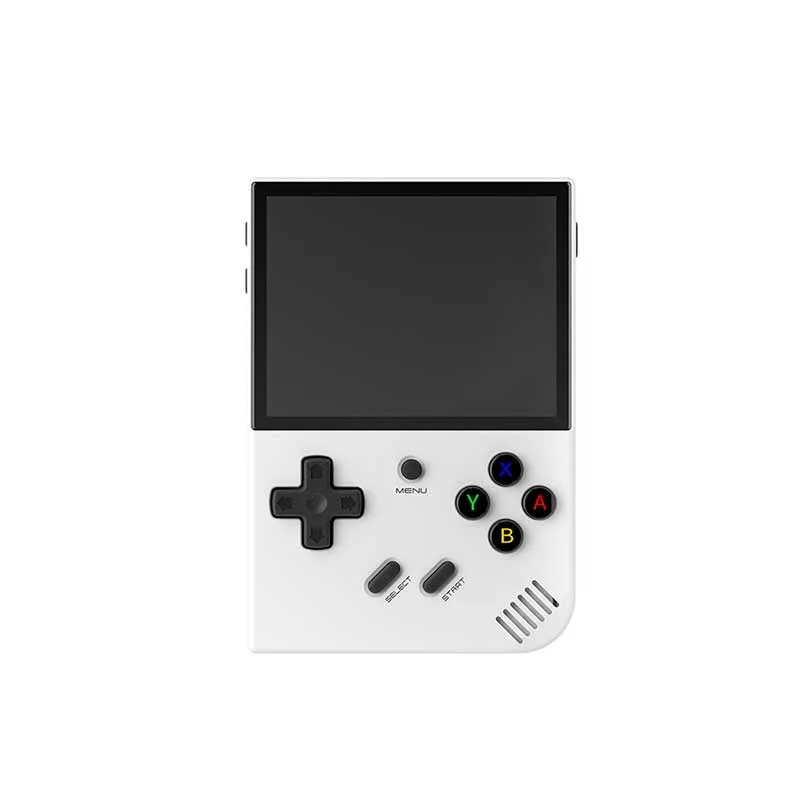
The RG40XX V moves up to a 4 inch IPS screen, still at 640 x 480, on the same H700 chip with 1 GB of RAM. The maker states a 3200 mAh battery and 6 hours of battery life, dual TF slots, 802.11ac Wi-Fi, Bluetooth 4.2 and 16 million colour RGB joystick lighting with several effect modes. Charging is listed at 5V/1.5A, and the maker says a C2C charger is supported.
Its maker-listed size is 13.9 x 9.2 x 2.2 cm and 216 g, so it is about 2.2 cm taller and 1.1 cm wider than the Plus. The maker's page describes it as "A ultra-Narrow Bezel Vertical Handheld". The maker lists RGB joystick lighting but its specs do not say whether the stick is analogue or where it sits, so check the maker's images for the control layout.
The maker's page calls it the RG 40XXV. The maker listed $67.99 as a sale price with no regular price visible (checked October 2026). Compared with the Plus, you get a larger screen and joystick lighting, with 2 fewer hours of stated battery life.
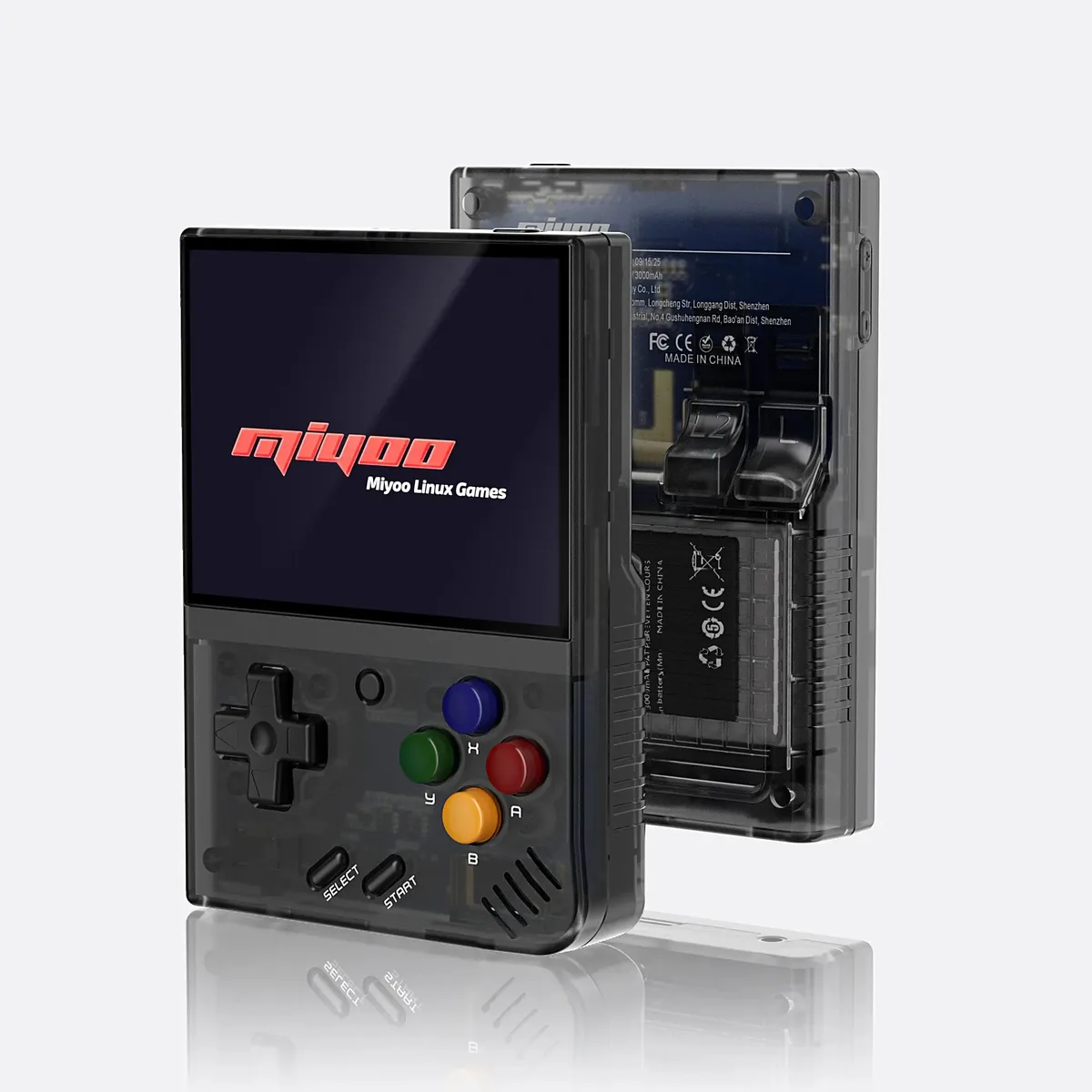
The Miyoo Mini Plus also uses the word on the maker's page, which describes "the beloved vertical form factor". The maker also lists a 3.5 inch 640 x 480 IPS screen, a SigmaStar SSD202D with two Cortex-A7 cores at 1.2 GHz, a 3.7V 3000 mAh Li-Po battery, built-in Wi-Fi and a 1-year warranty. It names the NES, SNES and GBA as supported systems, adding 20+ emulators without listing them.
The page is not tidy. Its spec sheet intro carries clamshell wording that appears to come from a different listing, which contradicts the vertical description, so treat the page's other details with care. The maker does not state RAM, weight, dimensions, Bluetooth or battery hours, so portability cannot be compared from maker data.
The maker lists $58.99 as a sale price in US dollars, against a regular price of $79.99, with a "from $53.99" figure shown for variants (checked October 2026). Its specs are lower than the Anbernic pair on paper (a dual-core chip at 1.2 GHz against quad-core at 1.5 GHz), so choose it for its named systems and upright shape, not for headroom. The two devices are set side by side on the Miyoo Mini Plus vs RG35XX Plus page.
Screen diagonal tells you less than width and height. Multiplying the stated length by the stated width gives the face of each body: 11.7 x 8.1 is about 94.8 square centimetres for the RG35XX Plus, and 13.9 x 9.2 is about 127.9 for the RG40XX V. The V is therefore roughly 35 percent larger on the face, and 30 g (about 16 percent) heavier, for a screen that is 0.5 inch bigger on the diagonal.
Both are 2.2 cm thick, so the extra bulk is all in length and width. If you plan to pocket the device, the 8.1 cm against 9.2 cm width is the figure to hold against your own pocket. Miyoo gives no figures, so measure before assuming it matches either Anbernic body.
All three screens are 640 x 480, which is 800 pixels along the diagonal (the square root of 640 squared plus 480 squared). Divided by the diagonal, that is about 229 pixels per inch on the two 3.5 inch screens and 200 on the 4 inch screen. This is our arithmetic, not a maker claim. The larger screen shows the same picture bigger rather than sharper, which suits you if you want bigger pixels and not if you want finer detail.
640 x 480 is 4:3 (worked out from the stated figures). Content in other ratios will show bars or be stretched, and the makers do not state how they scale a picture. Our guide to reading specs explains ratios, and the GBA guide shows how that plays out on screens that are not 4:3.
The stated cells are 3300, 3200 and 3000 mAh, so the three sit close together, and the maker hours are the better guide where they exist: 8 for the Plus and 6 for the V, none for Miyoo. If you take those claims at face value, 3300 mAh over 8 hours is an average of about 412 mA, and 3200 mAh over 6 hours is about 533 mA, which would mean the V draws more power for its larger screen and lighting. That is arithmetic on two unexplained claims, since neither maker says how its figure was measured. See battery life explained.
We make no claim that any of these has or lacks shoulder buttons unless the maker states it. If the buttons matter to you, look at the maker's images and ask before ordering.
The RG35XX Plus and RG40XX V both list dual microSD (TF) slots, with the Plus stating up to 512 GB per card. The Miyoo Mini Plus is expandable via microSD, and its page offers a 64 GB card or no card; the maker does not state a slot count or a card limit. For card basics, read our microSD guide.
All three prices are the makers' own dollar figures, shown as the maker displays them and dated October 2026. We have not converted them to pounds, and we have not checked UK prices, UK stock, delivery times or import VAT. A device bought from a maker outside the UK can attract import charges on top of the listed price, so treat the figures as a way to compare the three against each other and not as a total cost.
The price gap is smaller than it first looks. The V's $67.99 is $18.00 above the Plus's $49.99 sale price, but only $4.00 above the Plus's $63.99 regular price, and the Plus was shown as sold out. Of the three, only Miyoo states a warranty (1 year); we have no stated warranty term for either Anbernic model.
If a horizontal body would suit you better, the UK buying guide covers eight devices from entry to flagship, and the retro handhelds hub lists the whole catalogue. For folding bodies, see the clamshell guide.
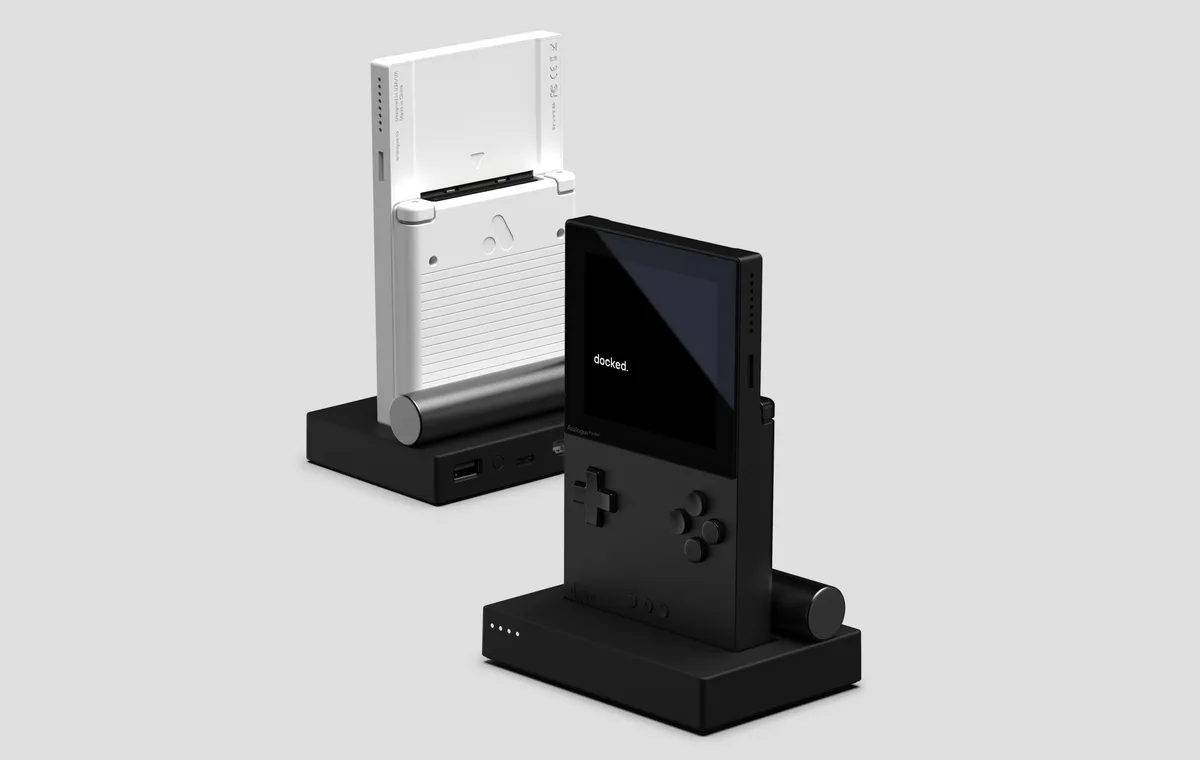
The Analogue Pocket's maker page does not state an orientation or give dimensions, so we could not establish it. The Powkiddy V10 is listed at 103.2 x 94 x 22.5 mm, which is nearly square, and its maker does not state an orientation either. The ModRetro Chromatic is a Game Boy style device that plays Game Boy and Game Boy Color cartridges; its maker lists 5.2 x 3 x 1.2 inches but does not say which way it is held, so we do not list it as vertical.
The Trimui Brick's maker table gives a width of 73.2 mm but a garbled height, so no body length is recorded. We also checked the Anbernic RG28XX, RG34XX, RG35XX H and RG CubeXX, whose maker-listed dimensions (for example 12.5 x 5.65 cm for the RG28XX and 14.5 x 6.9 cm for the RG35XX H) do not state an orientation, and length against width does not establish one, so we make no vertical claim for them. The RG34XXSP and RG35XX SP are clamshells.
Anbernic
Sold out3.5 in IPS, OCA full lamination · 3300 mAh · Linux 64-bit
UK price not checked
Anbernic
4 in IPS, OCA full lamination · 3200 mAh · Linux 64-bit
UK price not checked
Guides
Decodes the chip names makers list on retro handhelds, explains our entry, mid, high and flagship tiers, and says what those tiers cannot tell you.
8 min read
Guides
What the card does in a retro handheld, what makers state about slots and maximum sizes, and what the SD Association capacity and speed labels mean.
7 min read
Guides
Compares the IPS, OLED and LCD labels across 34 retro handhelds, with stated sizes and resolutions and pixel density worked out from the maker's figures. It does not explain how the panel types work.
7 min read